LOOKING FORWARD: Rethinking the Way People Over 60 Think of Life
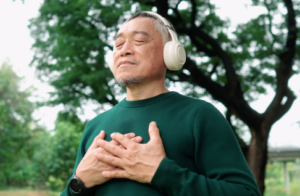
Why Calling People 60-75+ “New Life Builders” Changes Everything About How We Understand Aging Well?
Back in the mid-1990s, when I first moved to Bangkok to manage the market research and strategic planning divisions of advertising agency McCann across Asia-Pacific, we launched a program called McCann PULSE. Every single week, across 13 to 20 cities in the region, we sat down with ordinary people for open-ended, two-hour conversations. No rigid questionnaires, just listening to how people actually lived and what mattered to them.
To make sense of the human journey, we grouped people by life stages rather than tired demographic boxes. We had Identity Builders (late teens to early 20s), Career Builders (20s to early 30s), and Family Builders (roughly 30+ people with children). Then we did something no one else was doing. We thought about people after the kids had grown up.
I had been interested in the potential impact of ageing populations on marketers’ businesses for a decade. And no one seemed to be paying attention or asking them about what they wanted in life. In fact, at the time, sociologists, demographers, and marketers referred to those years with gloomy labels like “empty nesters” indicating their roles in life were finished or “seniors” as a polite way of saying “old” or even in some literature retirement was described as “the waiting-for-death years”. So, we started including regular groups with people 55-70+ to see what they really were like.
One afternoon in Kuala Lumpur, I was sitting with a group of working-class men and women in their late 50s and early 60s. I asked them how they saw this chapter of their lives. One of them looked at me and said, quite simply, “Well, we are starting a new life.” BINGO!!
A few weeks later, at a global meeting in America, I shared what we were doing and that story, and my brilliant colleague Joe Plummer said, “Well, you have Identity, Career and Family Builders, so why not call them New Life Builders?”
The label changed my career. And completely reshaped how I think about Aging Well.
Over the past three decades, from my McCann days to running my own storytelling consultancy, BIBLIOSEXUAL, and more recently serving with the Global Wellness Institute’s (GWI) Aging Well Initiative, I have told hundreds of clients the exact same thing… New Life Builders are the single most important life stage for growth for almost every category of product on the planet.
In nearly every country people between 60 and 80 are or will be soon the fastest growing age range, the ones with the most time, money and needs for new products and ideas. Yet, when I speak to creative directors and chief marketing officers today, they still confess they rarely get asked to write a brief aimed at anyone over 55*. Worse, when businesses do talk about aging, they treat it as a medical problem to be managed rather than a vibrant, forward-looking chapter of human life.
A New Life Builder isn’t shutting down. They are re-trying, not retiring. Whether I am talking to someone in Mumbai, Tokyo, Sydney, or London, they share one defining trait: they are looking forward, asking, “What will I do next?” And when we understand that mindset, we realize that Aging Well has very little to do with turning back the clock or shaking off death and everything to do with having the freedom, energy, and support to keep building their lives.
Recently, through the GWI Aging Well Initiative, we shaped a landmark international study conducted by the Mather Institute: Aging Well Across Countries: Global Perspectives on What Matters Most. You can download the full report from the link below. We surveyed nearly 4,400 adults aged 50 to 98 across five wildly different cultural and economic markets: Costa Rica, Denmark, Japan, Nigeria, and the United States.
For anyone trying to understand what Aging Well truly means today, and how brands, communities, and policymakers should respond, four truths about New Life Builders from the report stand out:
- 1. Aging Well Is About Functionality, Not Perfection
For decades, the wellness and marketing industries have equated aging well with “anti-aging”, erasing wrinkles or pretending decline doesn’t exist. Remember when phrases like “60 is the new 40” got started? Fortunately, some marketers, starting with leading Japanese beauty brands started to realise a decade ago that what people were really interested in was the idea that “60 is the new 60”.
Real older adults see ageing well completely differently now. And our recent research tells us they want to enjoy and explore life. Yes, physical health (66%) and mental health (64%) were the top two global priorities. In Japan, 90% of respondents placed physical health in their top five priorities, while Denmark stood out as the only market where mental health ranked first (75%) closely ahead of physical health.
However, health is valued not as a key to survival but because it is the engine that lets people stay active and engaged. As the report notes: “Older adults did not define Aging Well simply as avoiding illness or decline; they also emphasized staying mentally sharp, feeling connected, maintaining stability, and continuing to experience enjoyment and meaning in daily life.”
Tellingly, people living with an illness that did not limit their daily activities reported nearly the same high life satisfaction (68%) as those with no illness at all (72%).
Aging well isn’t the absence of diagnosis; it is the preservation of capability.
- 2. Autonomy and Daily Agency Are the Real Secret to Wellbeing
You cannot build a new life if you cannot steer the ship.
Across all five countries, 80% reported high independence in making health care decisions, 77% in getting where they need to go, and 76% in managing daily tasks. In the United States, 83% reported high independence across four or five areas of daily life, and 91% said autonomy contributes strongly to aging well.
When people feel they have the ability to accomplish what they set out to do 81% report high life satisfaction, compared to just 40% of those who feel less able. Even in Japan, where lower individual self-sufficiency scores (48%) reflect a culture built around relational harmony and interdependence rather than solo self-reliance, aging well still hinges on participating in daily life with dignity. For New Life Builders, being independent and getting things done, old and new, is what matters.
3. Joy, Curiosity, and Purpose Never Retire
Perhaps the biggest blind spot in how society views older age is underestimating the appetite for growth. Globally, 86% said joy and satisfaction contribute strongly to aging well, 80% said the same for having a sense of purpose, and 76% pointed to continuing to learn and grow. Those who reported “joy” as a big part of contributing to ageing well were also more likely to report higher life satisfaction.
Look at how a respondent in Denmark defined it: “For me, aging well means that I can maintain my joy of life, health, and independence for as long as possible. It’s about having the energy to do the things I love, being socially active, taking care of my body and mind, and at the same time, accepting the changes that naturally come with age.”
And 85% of respondents globally agreed that older and younger adults have valuable things to learn from one another. True aging well is deeply intergenerational and outward-looking.
- 4. Aging Well Is Shaped by Culture, Economics, and Community
Finally, our new report proves that Aging Well cannot be reduced to a single Western wellness checklist. Financial security ranked third globally (56%), yet it was the number one top five priority in Nigeria (67%) and weighed heavily in Japan (77%), where only 24% felt they had enough retirement savings. Meanwhile, spirituality or religion entered the top five priorities only in Nigeria (42%), where 89% said faith helps them find meaning and purpose, compared to just 25% in Japan and 26% in Denmark. And when it comes to social respect, 89% of Nigerians felt older adults are valued in society, whereas only 29% in Japan felt the same.
As the report concludes, “Aging Well is ultimately about being able to continue living in ways that feel meaningful, manageable, and connected.”
When brands finally stop treating the life stage of the late 50s to, say, the early 80s as an afterthought and start designing for New Life Builders, they don’t just unlock a massive commercial opportunity, they help build a world where growing older actually means growing forward.
The challenge for the Wellness world, just as it is for all businesses, is rethinking New Life Builders as a lifestage focused on retryerment and growth.
We hope our initiative will continue to guide those opportunities.
You can find the new report here.
In two earlier white papers we presented research with “ageing population experts” of various types globally and a study where we interviewed two dozen leading advertising creative directors on the issues of presenting older populations in advertising.
Dave McCaughan
Storyteller @ BIBLIOSEXUAL
Co-Chair Ageing Well Initiative, Global Wellness Institute