New GWI Resource Spotlights the Evidence Behind Contrast Hydrotherapy

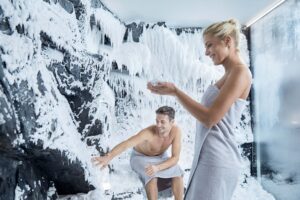
Interest in contrast therapy is everywhere right now — from cold plunges and sauna circuits to bathhouses, recovery lounges, social wellness spaces and luxury spas. Guests are increasingly curious about the benefits of moving between heat and cold, and operators are looking for smarter ways to design and deliver those experiences.
That makes the Global Wellness Institute’s new Wellness Evidence resource on Contrast Hydrotherapy especially timely.
The new page defines contrast hydrotherapy as a hydrothermal wellness practice that alternates exposure to heat and cold to create repeated physiological responses to thermal stress. Common examples include moving between saunas and cold plunge pools, hot and cold baths, steam rooms and cold showers, or other structured cycles of heating and cooling.
For the GWI Hydrothermal Initiative, this is an important moment. Contrast bathing is not new — it is deeply rooted in Nordic, Japanese, Russian, Central European and many other bathing traditions — but the current level of interest is bringing renewed attention to how these experiences are designed, guided, communicated and understood.
The excitement is understandable. Many people are drawn to contrast therapy for recovery, resilience, circulation, stress regulation and overall wellbeing. At the same time, the conversation is becoming more thoughtful. The future of contrast therapy is not simply about going colder, hotter or more extreme. It is about helping people understand how heat, cooling and rest can work together as part of a safe, balanced and meaningful wellness journey.
That is where evidence-based resources become so valuable.
GWI’s Contrast Hydrotherapy page brings together a definition, research database links and a research spotlight highlighting studies related to cardiovascular responses, autonomic nervous system activity, athletic recovery and other emerging areas of investigation. It also makes clear that while much of the existing science has focused on athletic recovery, research is increasingly exploring broader wellness effects.
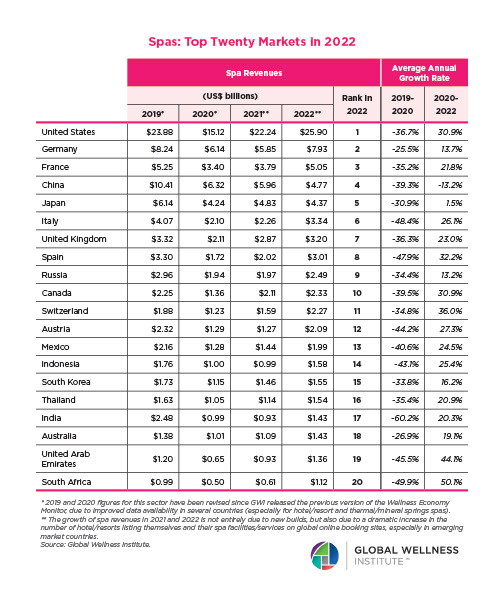
For spa, bathhouse and wellness operators, this resource can help support a more informed conversation with guests, investors, designers and practitioners. It reinforces the idea that contrast therapy is more than a trend. It is a hydrothermal practice with cultural depth, growing consumer demand and an expanding body of scientific inquiry.
As the popularity of contrast therapy continues to grow, the opportunity is to move beyond buzzwords and toward better education, better design and better guest experiences.
Explore the new GWI Wellness Evidence resource on Contrast Hydrotherapy here:
https://globalwellnessinstitute.org/wellnessevidence/contrast-hydrotherapy/