2026 Hydrothermal Initiative Trends

Initiative Chair: Don Genders, Founder & CEO, Design for Leisure, United Kingdom
Initiative Vice-Chair: Cassandra Cavanah, Founder, Cavanah Communications, United States
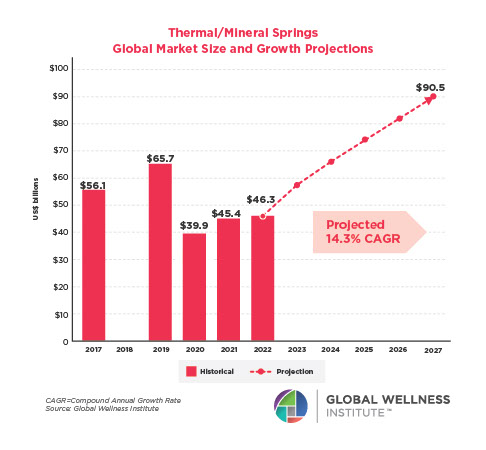
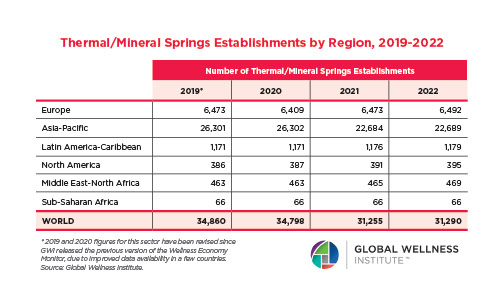
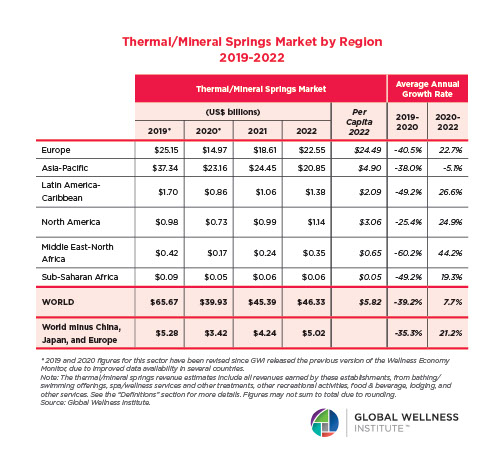
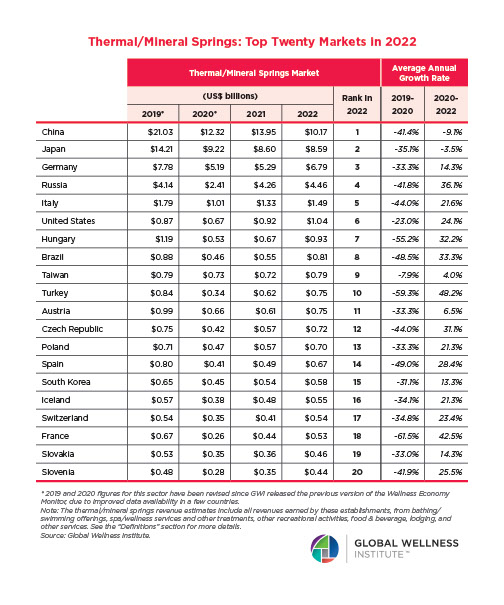
Hydrothermal bathing has deep cultural roots in many parts of the world, from the thermal traditions of Europe and Asia to Nordic sauna rituals and global spa cultures built around water, heat and recovery. In recent years, however, these practices have begun to evolve in new ways as wellness, hospitality and urban development increasingly intersect. What was once confined largely to traditional bathing destinations is now expanding into cities, hotels and purpose-built wellness environments around the globe.
Across these settings, hydrothermal experiences are becoming more intentional, immersive and economically significant. Designers and operators are rethinking how heat, cold, water and rest work together—integrating multisensory environments, guided rituals and more diverse cooling strategies, while also responding to growing demand for both communal and private wellness experiences.
Together, the following five trends illustrate how hydrothermal bathing is entering a new era: one that blends centuries-old traditions with contemporary design, science and evolving expectations around wellbeing.
TREND 1: The Cooling Conversation Matures
Last year, we highlighted a growing ice bath backlash—a shift away from extreme, single-modality cold plunges toward gentler, more accessible forms of cooling. In 2026, that shift has matured into a broader recalibration across wellness, fitness and hospitality. Operators, clinicians and consumers increasingly recognize that sustainable, repeatable cooling practices can deliver equal—or even greater—benefits than ultra-cold immersion, while being safer and far more widely tolerated.
As a result, facilities are moving beyond the traditional cold plunge and integrating a wider spectrum of cooling experiences into the overall thermal journey. These may include snow rooms and snow showers, experience showers, Kneipp-inspired walking pools, temperature-controlled cold rooms (typically 12-15°C) and shorter, guided contrast cycles. Cold is increasingly positioned not as a singular shock experience, but as one element within a thoughtfully designed hydrothermal circuit.
This shift is also being reinforced by elite athletic programs, many of which are adopting more moderate, protocol-driven heat-and-cold approaches in place of prolonged ice immersion. The reasons are both practical and physiological: large-scale ice baths can be challenging to manage in commercial environments due to safety, hygiene and guest tolerance, while emerging research suggests that moderate cold exposure can still deliver meaningful recovery and metabolic benefits when used consistently.
Why it matters
What we described as a “backlash” in 2025 has evolved into a more constructive recalibration. Cooling is moving from shock-and-awe toward protocol-driven, human-centered thermal design—supporting better wellbeing outcomes, operational sustainability and broader guest adoption.
Resources:
- The Effect of Contrast Water Therapy on Recovery After Exercise: A Systematic Review. Sports Medicine https://pubmed.ncbi.nlm.nih.gov/25689918/
- Cold Water Immersion: Sudden Cold Exposure and Its Physiological Effects. Comprehensive Physiology https://pubmed.ncbi.nlm.nih.gov/28135017/
- Should You Take a Cold Plunge After a Workout? https://www.mayoclinichealthsystem.org/hometown-health/speaking-of-health/cold-plunge-after-workouts
- Five Trends Driving the Business of Wellness Recovery. https://athletechnews.com/five-trends-driving-business-of-wellness-recovery/
TREND 2: From Sauna Boom to Hydrothermal Circuits
In 2025, we highlighted the explosive global growth of sauna culture — from mobile and pop-up saunas to the revival of traditional heat practices often paired with natural cooldowns in lakes, oceans or open air. In 2026, that movement is evolving beyond simple heat-and-nature pairings into fully realized hydrothermal bathing circuits designed specifically for urban environments and communal social wellness.
Urban wellness venues are increasingly building complete thermal environments that integrate heat, cold, water, rest and guided ritual. Instead of a quick sauna session, guests are engaging in multi-hour thermal journeys that combine different temperatures, sensory experiences and moments of recovery. These environments typically include multiple sauna types, steam rooms, snow rooms or cold chambers, contrast pools, experience showers and dedicated relaxation spaces.
Major signals of this shift include the continued expansion of Bathhouse in the United States and the growing footprint of Othership, alongside similar concepts emerging in cities from London to Melbourne. What began as grassroots sauna culture is rapidly becoming a scalable wellness model attracting institutional investment and strong consumer demand.
What’s new in 2026
- Urban thermal centers are emerging as modern communal bathing hubs, reviving social bathing culture in markets where it had largely disappeared.
- Guests are spending half-days or longer in these environments, using them as new “third places” for recovery, relaxation and connection.
- Strong early economics are attracting significant capital and accelerating expansion.
- Hospitality brands are beginning to respond by developing co-ed, communal hydrothermal circuits within hotels and resorts.
Why it matters
What began as a sauna renaissance rooted in nature and tradition is evolving into a broader return to communal thermal culture—now reimagined for dense urban contexts. Hydrothermal bathing is moving beyond trend status to become a defining feature of modern wellness infrastructure in cities.
Resources:
- How Contrast Therapy Became 2025’s Biggest Wellness Trend. Condé Nast Traveller. March 2, 2025. https://www.cntraveller.com/article/how-contrast-therapy-became-2025s-biggest-wellness-trend
- Bathhouse Is Changing the Face of Wellness Across America. Forbes. Nov. 13, 2025. https://www.forbes.com/sites/nadjasayej/2025/11/13/bathhouse-is-changing-the-face-of-wellness-across-america/
- The New York Bathing Club Boom. Wallpaper.com. Feb. 27, 2026. https://www.wallpaper.com/travel/spas/bathing-club-bathhouse-trend-new-york
TREND 3: From Hospitality Amenity to Anchor
Hotel brands are moving beyond the legacy model of relegating spa and wellness to the basement. Instead, wellness is becoming a central guest experience—with larger hydrothermal zones, destination-scale facilities and spa environments increasingly open to both guests and local communities. In some cases, bathing and thermal rituals are becoming a primary driver of hotel choice.
At the same time, demand for privacy-led wellness is rising. Inspired by luxury pioneers such as Aman Group, hotels are introducing bookable private wellness suites for couples or small groups, along with guest rooms that incorporate integrated saunas, steam rooms, soaking tubs and treatment spaces.
This “your room is your spa” model is already appearing in urban hospitality. At Nobu Hotel New York, select suites include onsen-style soaking tubs, steam rooms and in-room treatment setups—allowing guests to experience a full wellness ritual without leaving their accommodation.
Why it matters
Wellness is shifting from a secondary amenity to a strategic hospitality asset. Integrated hydrothermal facilities and in-room wellness support higher ADRs, premium suite pricing, longer stays and new revenue streams through private bookings and local memberships. For hotel brands, spa is increasingly becoming a core differentiator in an increasingly wellness-driven travel market.
Resources:
- Wellness Tourism Is Reshaping Luxury Hospitality. Forbes. Jun. 12, 2024. https://www.forbes.com/sites/carolinemccarthy/2024/06/12/wellness-tourism-luxury-hospitality/
- Aman New York: A New Benchmark for Urban Wellness. Spa Business Magazine.Spabusiness.com. https://www.spabusiness.com/spa-business-magazine/Aman-New-York-spa-wellness/36565
- The Rise of In-Room Wellness in Luxury Hotels. Condé Nast Traveller. Aug. 2024. https://www.cntraveller.com/article/wellness-hotel-room-trend
- Nobu Hotel New York Wellness Suites. Nobuhotels.com. https://www.nobuhotels.com/new-york/dining/wellness
TREND 4: Immersive Wellness Comes of Age
In 2025, we highlighted immersive wellness—light, sound, scent and visual storytelling—as emerging tools for evoking awe and deepening emotional connection. In 2026, that concept is moving beyond isolated installations into fully integrated multisensory thermal environments. Saunas, steam rooms, cold experiences and relaxation zones are increasingly designed to engage multiple senses simultaneously, guiding guests through emotional states such as calm, grounding, release or uplift.
This shift marks a new phase in hydrothermal design: sensory intelligence becomes part of the infrastructure, not an afterthought.
One of the clearest examples is Submersive, a 25,000-square-foot immersive wellness destination developed with leadership from the experiential arts collective Meow Wolf. The concept blends thermal bathing with projection mapping, spatialized sound, interactive light environments, scent diffusion and biofeedback-driven personalization.
Why it matters
Hydrothermal bathing is becoming more experiential and emotionally intelligent. Carefully choreographed sensory environments deepen thermal rituals, encourage repeat visitation and create moments of awe that support parasympathetic activation. Multisensory design is quickly moving from novelty to a defining feature of next-generation thermal environments.
Resources:
- Submersive: Immersive Wellness Experience Opening in Austin. https://www.submersive.com
- The Latest Spa Trend? Immersive Digital Treatments Designed to Calm Frayed Nerves. https://www.wsj.com/lifestyle/travel/the-latest-spa-trend-immersive-digital-treatments-designed-for-anyone-with-frayed-nerves-bbf20044
- Wellness Experiences in the Attractions Industry. https://blooloop.com/theme-park/in-depth/wellness-experiences-attractions-industry/
- Meow Wolf Cofounder Developing Immersive “Submersive” Spa Concept in Austin. https://www.mysanantonio.com/business/article/meow-wolf-submersive-spa-austin-opening-21222926.php
TREND 5: Guided Rituals, Free Bathing
Hydrothermal spaces are evolving from passive amenities into actively programmed recovery environments. Many venues now offer scheduled contrast sessions, aroma rituals, Aufguss performances and breathwork-and-heat classes. Much like boutique fitness studios, guests increasingly arrive for a specific recovery session—not simply to use the facilities—helping operators drive engagement, education and community.
At the same time, operators are rediscovering the value of unstructured bathing. Even highly programmed concepts such as Othership are designing new locations with free-flow thermal circuits alongside guided sessions. Guests increasingly want both: expert-led experiences when they seek structure and learning, and open bathing when they want autonomy, social connection or quiet restoration.
The result is a hybrid model—curated programming layered onto flexible hydrothermal environments that allow guests to move through heat, cold and rest at their own pace.
Why it matters
Guided experiences create differentiation, support ticketed programming and build community, while free bathing preserves accessibility and longer dwell times. Together, they broaden the audience for thermal wellness and help operators maximize both engagement and revenue.
Resources:
- Aufguss: The Sauna Ritual Bringing Theatre to the Spa Experience. https://www.spabusiness.com/spa-business-magazine/Aufguss-sauna-ritual-spa-trend/
- Social Bathhouses and Guided Sauna Rituals Are Transforming Wellness. https://www.cntraveller.com/article/social-bathhouse-wellness-trend
- Othership’s Social Sauna Model Expands as Guided Breathwork and Contrast Classes Gain Popularity. https://athletechnews.com