Guest Post from Pete Bates, The Pete Bates Project I wasn’t swinging because I was physically threatened. I was swinging because I was intellectually threatened. That’s something it took me a very long time to understand about myself. When I was a young man, I didn’t know how to argue without becoming aggressive. I didn’t know how to properly articulate what I was thinking, explain…

The Midlife Man: Why We Need to Take Men’s Health More Seriously
Why We Need to Take Men’s Health More Seriously The latest suicide statistics from the UK’s Office for National Statistics (ONS) released last week make for deeply troubling reading. In England and Wales, men aged 50–54 recorded a suicide rate of 28 deaths per 100,000 in 2025, the highest rate for this age group since records began in 1981. The rate rose from 27.3 in…
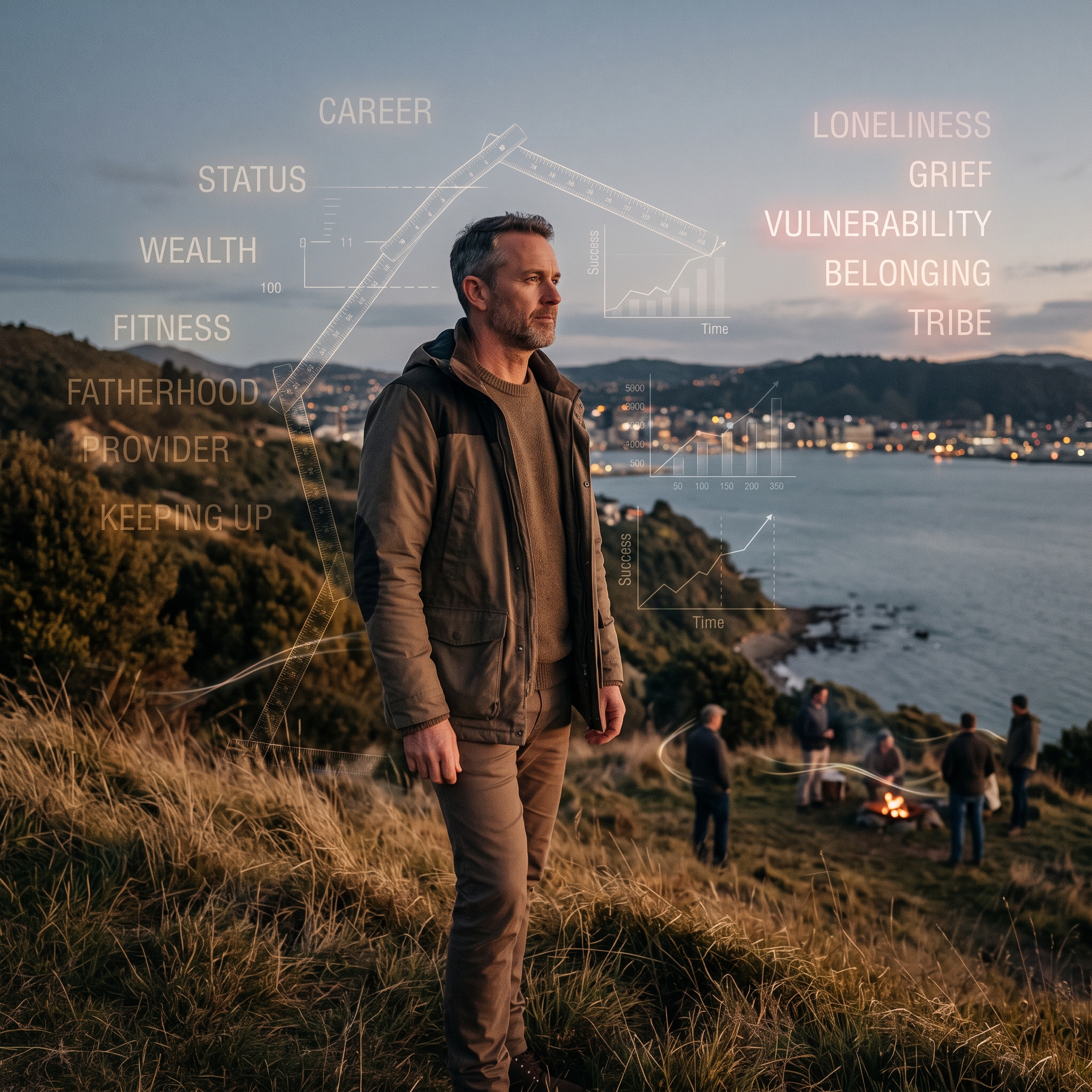
The Invisible Measuring Stick: Why Men Can Redefine Brotherhood Through Truth and Movement
There is an invisible measuring stick that follows men through life. Most of us never talk about it, but we know exactly what it measures. Are you successful enough? Strong enough? Wealthy enough? Fit enough? Are you a good husband, a good father, a capable provider? Did you build the business, buy the house, fulfil your potential and make something substantial of your life? Can…
Masculine Intelligence: Building Health & Resilience For Men
A perspective piece by James Davis – a member of our Initiative Let’s face it, most of us just aren’t as physically active as we used to be. Many men now work in offices and since Covid and increase in working from home has meant that even the sparse exercise of the commute has gone out the window. Well that matters because as human beings…
Japan’s Lonely Death Crisis and The Men Left Alone
And William (Bill) Hall, President, Ipsos Healthcare Japan Japan has a word for it: kodokushi. Literally translated as “lonely death”. It describes a person dying alone at home and remaining undiscovered for days, weeks, or in some cases years. This is not a new phenomenon. The term entered public consciousness in the 1980s. In 2025, the first wave of surviving postwar baby boomers (1947 -1949)…

The Men Who Forgot How to Feel Together
The Men Who Forgot How to Feel Together Grief, movement, and the lost art of relational masculinity There is a growing conversation taking place around men and masculinity. Much of it is polarized. Some narratives frame men primarily as a problem to be solved, while others attempt to restore masculine confidence through increasingly performative ideals of strength, dominance, optimization, and control. Between these poles, many…