Definition of Contrast Hydrotherapy
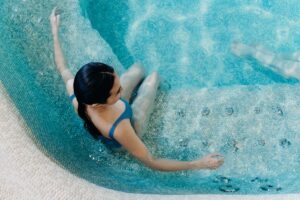
Contrast Hydrotherapy is a hydrothermal wellness practice that alternates exposure to heat and cold to create repeated physiological responses to thermal stress. Common forms include moving between saunas and cold plunge pools, hot and cold baths, steam rooms and cold showers, or other cycles of heating and cooling. Widely used in Nordic, Japanese, Russian, and Central European bathing traditions, contrast therapy is intended to stimulate circulation, activate thermoregulatory mechanisms, influence autonomic nervous system activity, and promote recovery, resilience, and wellbeing. While much of the scientific literature has focused on athletic recovery, emerging research is increasingly examining its effects on cardiovascular function, stress regulation, and overall wellness.
Explore Contrast Hydrotherapy research in the following medical databases:
PubMed Trip Cochrane*
*The Cochrane database requires users to enter the search term manually. Please enter ‘Contrast Hydrotherapy’.
AI Search: Access Semantic Scholar’s results on Contrast Hydrotherapy.
Semantic Scholar
Learn more about our 3 research databases and AI search platform HERE.
Research Spotlight
The databases often return hundreds of medical studies for a single wellness approach. This section provides a sampling of studies – providing just a taste of the available research.
-
- Acute Finnish Sauna Heating and Cold Water Immersion Led to Significant Changes in Cardiovascular Measures in Women
A 2025 study from Poland’s Wroclaw University of Health and Sport Sciences examined the effects of repeated sauna bathing followed by cold-water immersion in 28 healthy, normotensive women. Participants completed three cycles of Finnish sauna exposure interspersed with cooling periods that included cold-water immersion. Researchers found significant changes in cardiovascular measures, including blood pressure and heart rate, suggesting that alternating heat and cold creates substantial physiological responses and may promote adaptation to thermal stress. While the study did not examine long-term health outcomes, it provides evidence that sauna-cold immersion protocols commonly used in thermal wellness settings have measurable effects on cardiovascular regulation. Access this study on Contrast Hydrotherapy. - Study First to Show that A Single Session of Combined Sauna Bathing and Cold-Water Immersion Amplifies the Blood Pressure Response to Exercise (But Not Cold Exposure)
A 2025 study from the Western Norway University of Applied Sciences (their REACT project) explored the combined effects of sauna bathing and cold-water immersion on cardiovascular regulation during physical stress. The researchers noted that sauna bathing and cold exposure have often been studied separately, despite frequently being practiced together in wellness and bathing traditions around the world. The study investigated how a combined heat-and-cold protocol influences the body’s cardiovascular responses to challenges such as exercise and cold exposure. It was the first study to find that a single session of sauna bathing plus cold-water immersion amplifies the blood pressure response to exercise, but not to cold exposure. While the findings are preliminary, the research represents an important step toward understanding the physiological effects of contrast therapy as it is commonly experienced in spas, bathhouses, and thermal wellness facilities. Access this study on Contrast Hydrotherapy. - Contrast Water Therapy Baths and Saunas Produce Measurable Changes in Autonomic Nervous System Activity
A 2024 experimental study from the Japan Health and Research Institute examined how contrast bathing (water-based) and sauna-based contrast exposure affect the autonomic nervous system, typically measured through heart rate variability and related markers. It aimed to determine whether alternating heat and cold stimuli can meaningfully influence autonomic balance. The study found that contrast interventions do produce measurable changes in autonomic nervous system activity, but effects varied depending on the protocol (bath vs sauna) and were not clearly linked to downstream health or performance outcomes. The main limitations of the study were small sample sizes, short-term measurement only, and lack of clinical endpoints, meaning the findings remain mechanistic rather than outcome driven. Access this study on Contrast Hydrotherapy. - Metareview Examines How Different Water- and Temperature-Based Methods Impact Post-Exercise Muscle Damage: Contrast Water Therapy Most Effective for Reducing Biochemical Markers of Damage; Cold Treatments Best for Reducing Muscle Soreness and Improving Neuromuscular Recovery
A 2024 meta-analysis of 57 studies (1,220 participants) from Beijing Sport University compared different water- and temperature-based recovery methods after exercise-induced muscle damage. The findings showed that contrast water therapy (alternating hot and cold) was most effective for reducing biochemical markers of muscle damage such as creatine kinase, while cold-based treatments ranked highest for reducing muscle soreness and improving neuromuscular recovery. Overall, the study suggests that different modalities target different recovery outcomes, with cold-based approaches particularly strong for pain and function, and contrast therapies better for physiological recovery markers. Access this study on Contrast Hydrotherapy. - ‘Hot’ and Cold Therapy Reduced Weight Gain and Improved Metabolic Health in Mice
A 2016 experimental study published in Nature on mice showed that exposure to mild cold and thermogenic compounds (capsinoids) can reduce weight gain and improve metabolic health. The combination of mild cold exposure and capsinoids produced the largest effect—reducing diet-induced weight gain by ~31%, compared to smaller reductions from each intervention alone. These effects were linked to activation of brown and beige fat (thermogenic fat), improved insulin sensitivity, and enhanced glucose metabolism. The findings suggest that thermal stress (especially cold) can increase energy expenditure via thermogenesis and may have therapeutic potential for obesity, though research is needed on humans. Access this study on Contrast Hydrotherapy.
- Acute Finnish Sauna Heating and Cold Water Immersion Led to Significant Changes in Cardiovascular Measures in Women
-
Access all studies currently available for contrast hydrotherapy in these databases:
PubMed Trip Cochrane* Semantic Scholar
*The Cochrane database requires users to enter the search term manually. Please enter ‘Contrast Hydrotherapy’.