2026 The Science of Yoga Initiative Trends

Initiative Chair: Leah Nduati, CEO, Certified Yoga Instructor, Founder of Yoga Experiences Africa
Initiative Vice-Chair: Bija Bennett, Author, President, BijaB, Yoga Therapist, United States
In 2026, yoga is undergoing a significant evolution. Once largely framed as a global fitness practice, it is increasingly recognized as a science-based system of self-regulation and preventive health. Researchers across neuroscience, behavioral medicine and epigenetics are investigating how yogic practices influence biological systems including the nervous system, inflammatory pathways and emotional regulation.
At the same time, new technologies and global wellness trends are reshaping how yoga is practiced, taught and delivered. Artificial intelligence, biometric monitoring and digital platforms are introducing new forms of personalization, while healthcare systems are exploring yoga’s role in addressing chronic conditions such as stress disorders, addiction and metabolic disease.
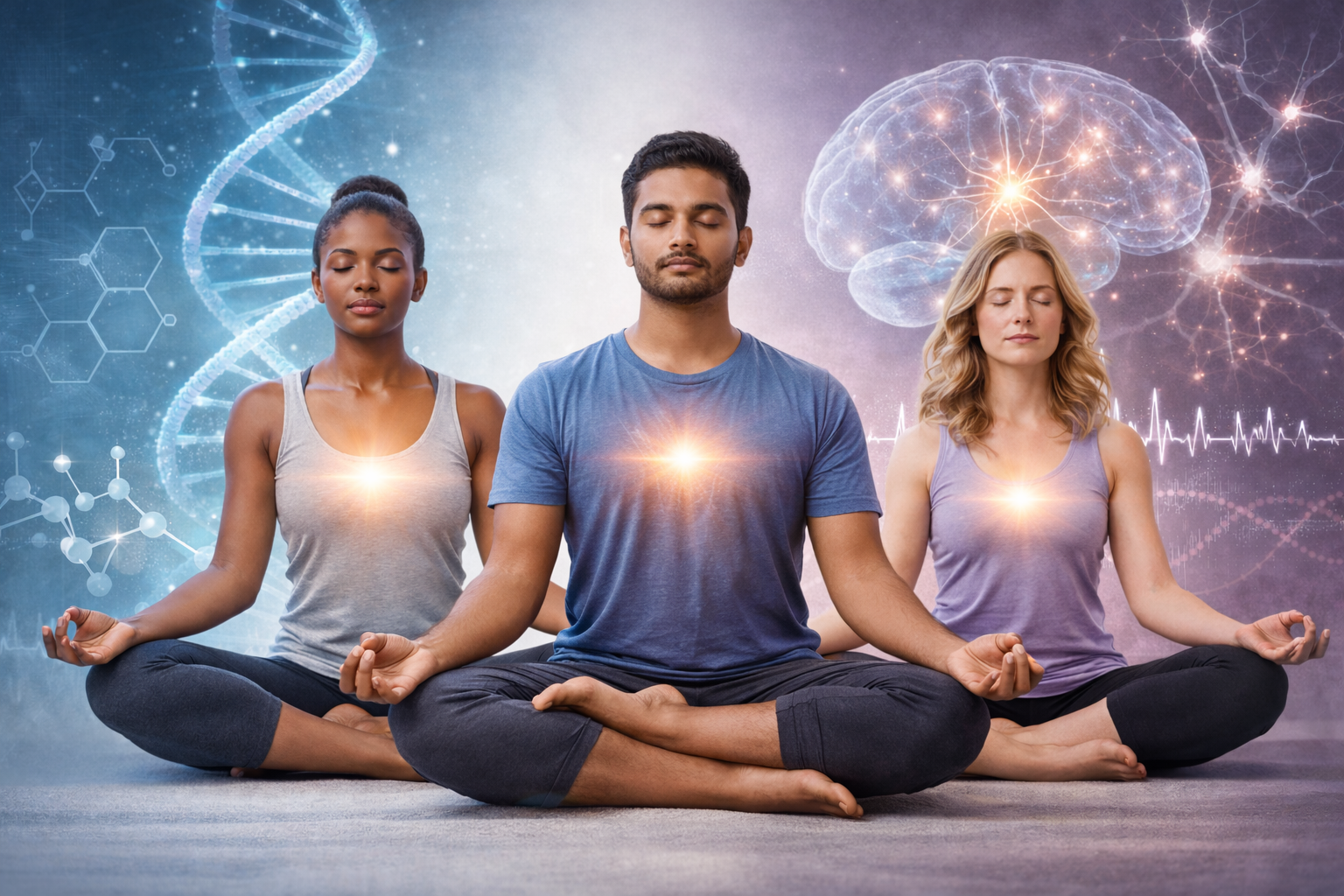
The following trends explore how the science of yoga is emerging as a bridge between ancient practice and modern research, shaping the future of integrative health and human wellbeing.
TREND 1: The Genomic Renaissance of Yoga
Advances in molecular biology are reshaping how researchers understand the physiological effects of yoga. New studies in epigenetics and transcriptomics suggest that yoga practices may influence gene expression related to inflammation, stress and cellular aging.
A 2025 systematic review analyzing randomized controlled trials found that yoga interventions can modulate genes associated with immune regulation and inflammatory responses. Researchers observed changes in biological pathways linked to stress reduction and metabolic regulation, supporting the idea that lifestyle practices such as yoga can influence gene activity rather than altering DNA itself.
This emerging research contributes to what some scientists describe as a genomic renaissance in mind–body medicine, where behavioral practices are evaluated for their capacity to affect molecular pathways underlying chronic disease.
Beyond laboratory findings, this trend also reflects growing interest in precision lifestyle medicine. Instead of one-size-fits-all classes, yoga therapists and clinicians are increasingly exploring personalized protocols designed to address specific health concerns such as inflammation, stress disorders and metabolic dysfunction.
While the field remains early, genomic research is expanding scientific understanding of yoga as a system-level intervention. Rather than acting on a single organ or symptom, yoga appears to influence interconnected biological systems including immunity, metabolism and neuroendocrine signaling.
As research continues, genomic approaches may help clarify how ancient practices can contribute to modern preventive health strategies.
Resources:
- Dada, R., Gautam, S., Dada, T., Tiwari, P., Kumar, M., Tolahunase, M., Singh, K., & Yadav, R. K. (2025). Effects of yoga on gene expression: A systematic review of randomised controlled trials. Cureus, 17(2), e82690. https://doi.org/10.7759/cureus.82690
- Hurd, E. (2015, November 11). Yoga study: How yoga reshapes gene expression. YogaUOnline. https://yogauonline.com/yoga-practice-teaching-tips/yoga-teaching/yoga-study-how-yoga-reshapes-gene-expression/
- Qu, S., Olafsrud, S. M., Meza-Zepeda, L. A., & Saatcioglu, F. (2013). Rapid gene expression changes in peripheral blood lymphocytes upon practice of a comprehensive yoga program. PLoS ONE, 8(4), e61910. https://doi.org/10.1371/journal.pone.0061910
TREND 2: Neurowellness and Nervous System Regulation
A growing body of research highlights the role of yoga in regulating the autonomic nervous system, particularly through breath control, meditation and mindful movement. This has contributed to the rise of neurowellness, a wellness framework focused on restoring balance between the body’s stress response and recovery systems.
Modern lifestyles expose individuals to chronic stress, which can lead to persistent activation of the sympathetic “fight-or-flight” response. Yoga practices, including slow pranayama, relaxation techniques and meditation, have been shown to stimulate the parasympathetic nervous system, helping the body shift toward states of rest and recovery.
Recent clinical research demonstrates measurable physiological changes associated with yoga practice. For example, studies examining heart-rate variability which is a key marker of nervous system regulation, have found improvements following structured yoga interventions, indicating enhanced autonomic balance.
These findings are helping position yoga as a behavioral tool for nervous system training, rather than simply a physical exercise. Healthcare programs increasingly integrate yoga into stress management programs, trauma-informed care and workplace wellbeing initiatives.
The growing emphasis on neurowellness reflects a broader shift in wellness culture. Instead of focusing solely on productivity or peak performance, many individuals are prioritizing emotional regulation, resilience and long-term nervous system health.
Yoga’s combination of pranayama, asana and meditation places it at the center of this emerging field.
Resources:
- Kumar, Y., Ganashree, C. P., Tripathi, C. B., Shrikant, B. K., & Kumari, A. (2025). The effects of Rajyoga mindfulness meditation training on heart rate variability in panic disorder: A randomized controlled trial. Indian Journal of Psychiatry, 67(3). https://pmc.ncbi.nlm.nih.gov/articles/PMC12032590/
- Sreevani, R., Goud, S., & Shruthi, R. (2025). Effect of yoga-based interventions on heart rate variability and anxiety among students: A systematic review and meta-analysis. Journal of Education and Health Promotion, 14(1). https://pmc.ncbi.nlm.nih.gov/articles/PMC12700775/
- American Heart Association. (2025, September 9). Yoga isn’t just for flexibility – it may also protect brain health. https://www.heart.org/en/news/2025/09/09/yoga-isnt-just-for-flexibility-it-may-also-protect-brain-health
TREND 3: Pranayama and the Globalization of Yogic Breathing
Breath regulation has become one of the fastest-growing practices in global wellness. Across digital platforms, therapy programs and corporate wellbeing initiatives, breathwork is increasingly promoted as a tool for stress reduction, emotional regulation and cognitive performance.
Many of these techniques originate in pranayama, the yogic discipline of controlled breathing. In classical yoga philosophy, pranayama is not simply a relaxation technique, but part of a broader framework for cultivating concentration, energy regulation and mental clarity.
Scientific interest in breath practices has expanded significantly in recent years. Research suggests that slow breathing patterns, often around six breaths per minute, can improve autonomic regulation, increase heart-rate variability and reduce symptoms of anxiety and stress-related disorders.
As breath-based practices become mainstream, a key conversation emerging in wellness and academic communities concerns cultural translation. While rebranding pranayama as breathwork may increase accessibility, some scholars emphasize the importance of acknowledging the cultural and philosophical origins of these techniques.
The future of breath practice may lie in integrating scientific validation with cultural context. As research continues to explore the physiological mechanisms behind breathing practices, yoga traditions provide a deep knowledge base that informs how these techniques are practiced safely and effectively.
Resources:
- Amatya, N. (2025). Effects of slow breathing on heart rate, blood pressure and oxygen saturation: A comparative study between healthy non-yogic adults and yogic adults. Journal of Physiology and Health, 12(3), 45–58. https://www.researchgate.net/publication/395558183_Effects_of_Slow_Breathing_on_Heart_Rate_Blood_Pressure_and_Oxygen_Saturation
- Fincham, G. W., Strauss, C., Montero-Marin, J., & Cavanagh, K. (2023). Effect of breathwork on stress and mental health: A meta-analysis of randomised-controlled trials. Scientific Reports, 13(1), Article 432. https://doi.org/10.1038/s41598-022-27247-y
- Laborde, S., Iskra, M., Dosseville, F., Mosley, E., & Ackermann, S. (2023). Influence of slow-paced breathing on the autonomic nervous system: A systematic review. Brain Sciences, 13(12), Article 1612. https://doi.org/10.3390/brainsci13121612
TREND 4: Artificial Intelligence and the Future of the Yoga Teacher
Technology is rapidly transforming the delivery of yoga instruction. After the surge of virtual classes during the early 2020s, the next stage of innovation involves AI-driven personalization.
Using biometric data from wearable devices—including heart-rate variability, sleep patterns and movement tracking—digital platforms can generate individualized yoga sequences tailored to a practitioner’s physiological state. These tools promise greater accessibility and precision, potentially helping individuals design practices that support stress management, recovery and performance.
However, this technological evolution also raises important questions about the role of the teacher. Yoga has traditionally been transmitted through direct mentorship and experiential learning, where teachers adapt practices based on observation, dialogue and intuition.
The Yoga Therapy Renaissance underscores that yoga therapy is fundamentally a personalized, relational process grounded in assessment and human interaction.
While artificial intelligence may improve accessibility and provide useful data, many experts believe the future of yoga will involve a hybrid model. Technology may support practice through measurement and feedback, but human teachers remain essential for providing emotional attunement, safety and therapeutic guidance.
As the wellness industry embraces technological innovation, preserving the human dimension of yoga may prove essential to maintaining the depth and integrity of the practice.
Resources:
- Asivana Yoga. (2026, January 15). Yoga and Artificial Intelligence: Personalizing the practice through wearables and HRV data. https://asivanayoga.com/blogs/yoga-blog/yoga-and-artificial-intelligence
- Narayanan, S. (2024). Artificial intelligence (AI) in yoga practice: Balancing technological innovation with traditional wisdom. World Yoga Council Journal, 12(2), 45–52. https://www.wycindia.co.in/post/artificial-intelligence-ai-in-yoga-practice
- Sinha, N., & Sinha, R. K. (2024). Harnessing the potential of artificial intelligence in Yoga Therapy. International Journal of Yoga, 17(3), 242–245. https://doi.org/10.4103/ijoy.ijoy_124_24
- YogaRenew Teacher Training. (2025). AI and the future of yoga: Why the human dimension remains essential. https://www.yogarenewteachertraining.com/ai-and-the-future-of-yoga/
TREND 5: Yoga in Addiction Recovery and Behavioral Health
Addiction and behavioral health disorders represent some of the most urgent challenges facing global healthcare systems. In response, treatment programs are increasingly integrating holistic approaches that address both physiological and psychological dimensions of recovery.
Yoga has emerged as a valuable complementary therapy within these programs. Since the late twentieth century, rehabilitation centers have incorporated yoga practices to help patients manage stress, regulate emotions and rebuild awareness of the body.
The Yoga Therapy Renaissance highlights how yoga therapy can support individuals dealing with conditions such as addiction, anxiety and depression by helping them develop healthier behavioral patterns and coping strategies.
Recent studies suggest that yoga may help reduce cravings, improve mood regulation and support recovery by stabilizing the nervous system. These practices encourage participants to reconnect with internal bodily signals—an ability known as interoceptive awareness, which is often disrupted in addiction and trauma.
Importantly, yoga therapy is not intended to replace medical treatment. Instead, it functions as a complementary practice that supports broader treatment plans and empowers individuals to participate actively in their healing process.
As healthcare systems continue to adopt integrative models, yoga therapy may become an increasingly common component of multidisciplinary recovery programs aimed at addressing both the physical and psychological dimensions of addiction.
Resources:
- Powell, A. (2026, February 24). Yoga can help cut severe initial opioid-withdrawal period in half, study finds. Harvard Gazette. https://news.harvard.edu/gazette/story/2026/02/yoga-can-help-cut-severe-initial-opioid-withdrawal-period-in-half-study-finds/
- Sharma, N., Krishna, N. R., & Barnwal, S. L. (2025). The impact of yoga intervention on liver health in individuals with alcohol addiction. Revista Internacional de Investigación en Adicciones, 11(1). https://doi.org/10.28931/riiad.2025.347
- Bennett, B. (2023). The Yoga Therapy Renaissance: A new wellness modality for the 21st century. https://globalwellnessinstitute.org/wp-content/uploads/2023/12/The-Yoga-Therapy-Renaissance-Final.pdf