A recent University of Zurich study suggests that if you want to help people lose weight, you need to help them relax. People who underwent a somewhat stressful experience were 24 percent more likely to opt for unhealthy snacks afterwards than those who didn’t. And the brain scans on the participants may illustrate why stress is the enemy of self-control and healthy eating: for the stressed subjects, the neurological connectivity between areas of the brain that are associated with value judgments, long-term planning and tastiness were affected.
Read more on wellnessevidence.com
Can Money Buy Happiness? Depends on the Type of “Money”
One of economists’ favorite, eternal debates is whether money brings happiness. And this week, Thierry Malleret sums up new research from the Office of National Statistics (UK) that concludes that (despite the common wisdom otherwise) it, in fact, does. Up to a point, because not all types of “money” lead to happiness. Read more to find out which types of wealth are most strongly associated with personal wellbeing—and how that shiny sports car isn’t one of them.
Insight: Workplace Wellness Must Tackle Two Radically Different Employees: Millennials & “Work Forever” Baby Boomers
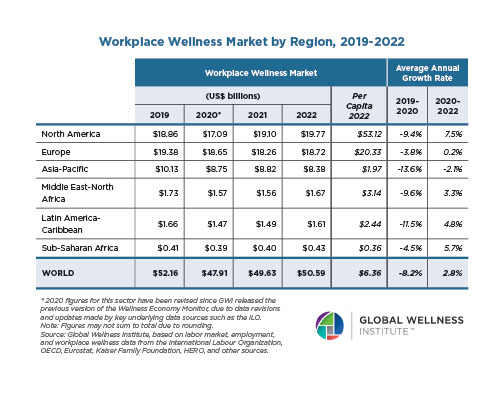
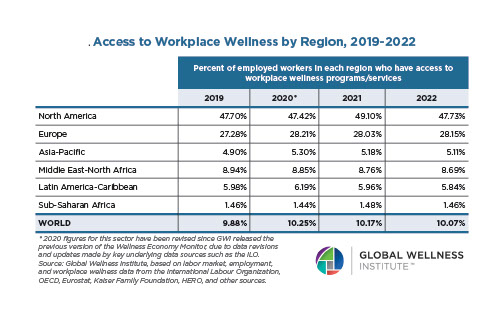
A new work reality is unfolding across much of the world: Two dramatically different age groups are increasingly mingling at workplaces—millennials (with their tech-obsessed brains) and Baby Boomers, who are extending their work lives in unprecedented ways. And a key discussion point at the Global Wellness Institute’s “Redefining Workplace Wellness” roundtable was how different their needs are: i.e., millennials demand far more work flexibility and all forms of wellness, while Baby Boomers are a key part of the remote worker surge and migrate in and out of work.
Must-Reads from the Wellness World (Week of September 30, 2015)
“Young Europeans may die at earlier age than their grandparents, says WHO” – The Guardian, September 23, 2015. For all the excitement about the wellness trend, a recent WHO report indicates that young European people may die at an earlier age than their grandparents if the region fails to curb smoking, drinking and obesity. Different mitigating measures are envisaged, but the pressure for a sugar tax is mounting.
What’s On My Mind: Surprises at Mayo Clinic
I recently spent three days in Rochester, Minnesota, at Mayo Clinic, finally making good on my promise to Dr. Brent Bauer, who has for many years invited me to visit. I also took his good advice not to plan the trip during winter (not a fan of below-zero weather) and am happy to report I had two beautiful days with sunshine and perfect temperatures.
UK’s Nat’l Health Service Takes Major Action on Worker Health
Thierry Malleret argues that persistent global economic weakness is the “new normal,” straining the financial outlook of countries around the world. The upshot: this will make more “well” populations an increasing imperative for governments and businesses everywhere.
A great new example of action being taken: The UK’s National Health Service, the fifth-biggest employer in the world (and with one of England’s most unhealthy employee populations), has decided that a “healthy workplace” is no longer a “nice to have, but a must-do.” So it’s investing millions in things like healthy food, yoga and Zumba classes for staff.
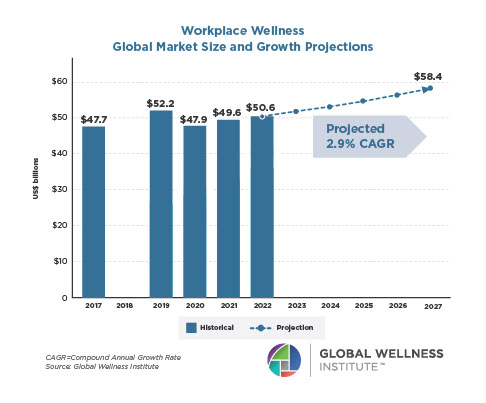
Read more about how Malleret predicts that two macro forces—ongoing global economic weakness and an aging population—will increasingly make workplace wellness a strategic imperative.