The contemplative and slightly burdened appearance of the man in this image reflects the article's focus on the psychological wellbeing of men in their fifties. It visually represents the emotional weight of midlife dissatisfaction, the feeling of relentless financial responsibilities, and the complex realization that life has not turned out exactly where they thought they would be.

The Midlife Man: Why We Need to Take Men’s Health More Seriously

Why We Need to Take Men’s Health More Seriously The latest suicide statistics from the UK’s Office for National Statistics (ONS) released last week make for deeply troubling reading. In England and Wales, men aged 50–54 recorded a suicide rate of 28 deaths per 100,000 in 2025, the highest rate for this age group since records began in 1981. The rate rose from 27.3 in…


The Invisible Layer: Electromagnetic Exposure and Human Health in the Built Environment

We’ve learned to recognize what makes a space feel good. Natural light, fresh air, materiality, and connection to nature have become essential ingredients in how we shape healthier environments. These elements are now widely understood, measured, and intentionally designed. Alongside them, another layer is present in almost every space we inhabit, quiet, unseen, and rarely part of the design conversation: electromagnetic fields (EMFs). They are…
What Belonging Has to Do with Mental Wellbeing at Work

While we are talking more about mental health, and there is even a day set aside to highlight its importance, are having the conversations we need to have about the way a workplace culture informs our mental wellbeing? I don’t think so. Many companies may see wellbeing as a program or an initiative. In this case, there may be relevant and informative presentations, the possibility…

Beyond Burnout: Why the Future of Work Requires a Salutogenic Approach

Beyond Burnout: Why the Future of Work Requires a Salutogenic Approach Author: Elizabeth Bachrad, MA, MSc For decades, workplace health and wellbeing has largely been framed through the lens of risk. Organizations have become increasingly sophisticated at identifying psychosocial hazards such as excessive workload, job insecurity, poor management, workplace conflict, and burnout. These approaches have transformed occupational health by helping employers recognize and reduce many…

Sauna rituals and expansion plans feature strongly in early bathhouse survey findings

Media Alert: Sauna rituals and expansion plans feature strongly in early bathhouse survey findings Early findings from the 2026 Bathhouse & Thermal Wellness Development Benchmark Survey highlight guided experiences and event saunas: 77% of 47 respondents offer or plan guided thermal programming, while 62% have or plan a large-format/event sauna. Among the 37 currently operating respondents, 43% identify “Aufguss / sauna rituals” as part of their programming. Updated October 6,…

Exploring the Many Dimensions of Workplace Wellbeing: The 2026 Recommended Reading List

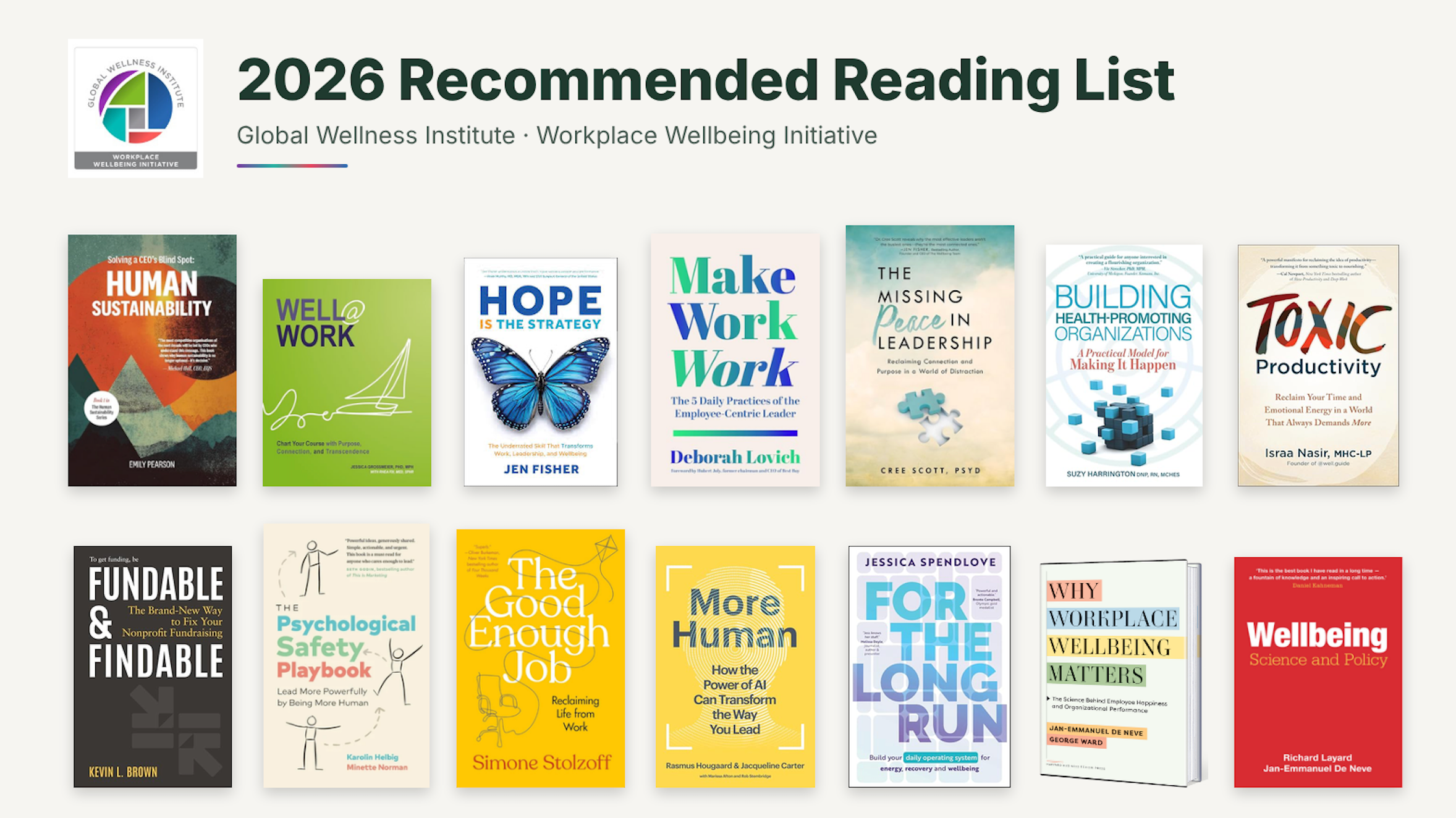
Exploring the Many Dimensions of Workplace Wellbeing: The 2026 Recommended Reading List Authors: Talya Landau and Jessica Grossmeier, PhD, MPH Workplace wellbeing has come a long way from wellness perks and health risk reduction. Today the conversation is about whether work itself is sustainable for the people doing it, and what leaders, teams, and organizations can do to make it so. To support that work,…