AMAALA Triple Bay
Tabuk Province, Red Sea Region, Kingdom of Saudi Arabia
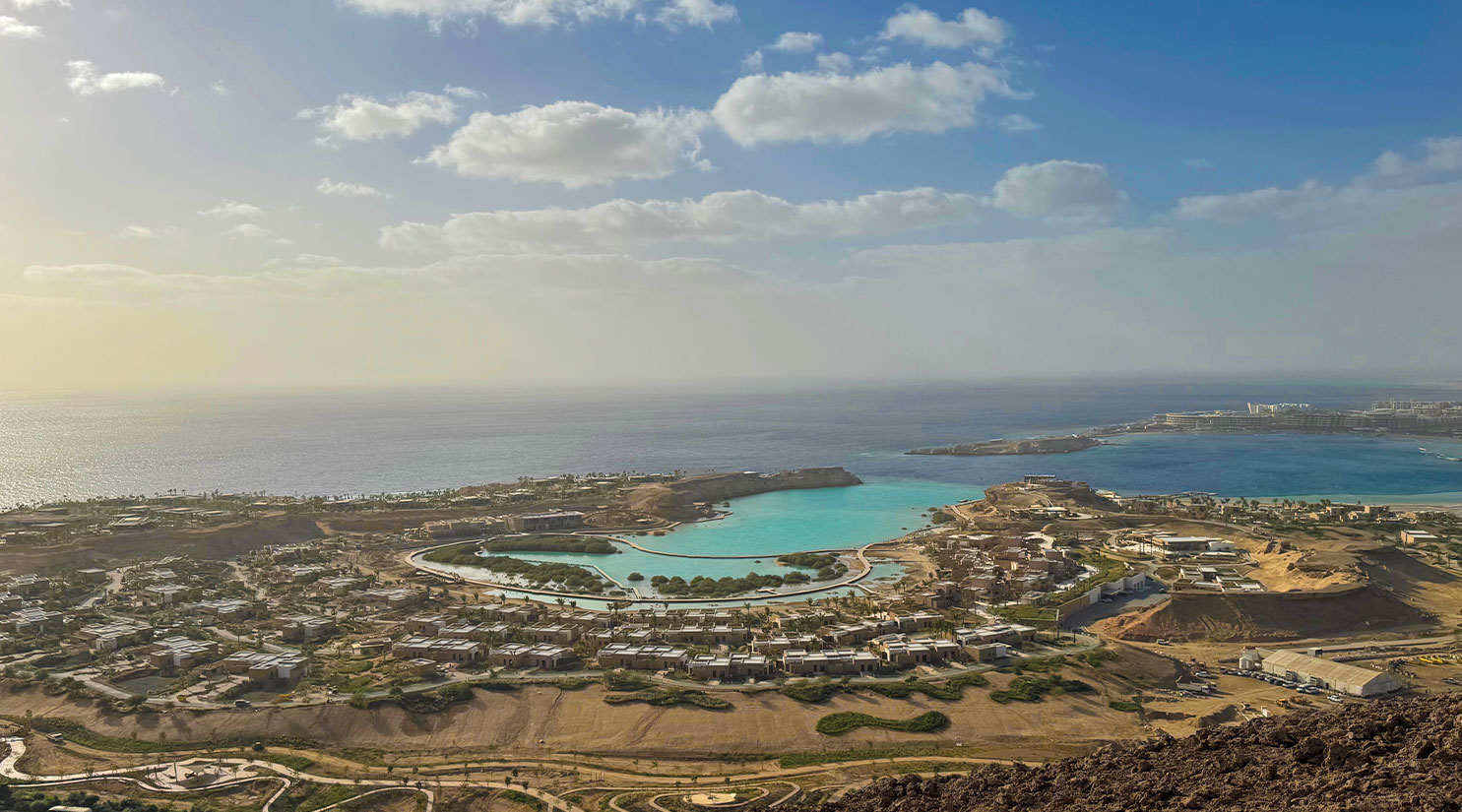
AMAALA is a comprehensive, integrated and master-planned global wellness destination located along the previously undeveloped Red Sea coastline of the Kingdom of Saudi Arabia (KSA). The project is the first of its kind in both the region and the world, for its scale, scope, speed of development and audacious commitment to wellness and sustainability. Created over a span of eight years, AMAALA is one of the flagship tourism developments launched under the auspices of KSA’s Vision 2030, supporting the national goals of economic diversification, high-quality tourism development and sustainability. The project is developed and owned by Red Sea Global (RSG), a Public Investment Fund company. The Triple Bay master plan is the first stage of development (which is the focus of this case study). Spanning a development area of over 1 million acres/4,155 sq.km., including 42mi/68km of pristine coastline, AMAALA is one of several large-scale tourism development projects along the Red Sea. It is geographically situated between NEOM to the north and The Red Sea destination to the south.
The mandate of AMAALA is to create a regenerative tourism destination anchored in wellness, sports and nature. It is designed as a family-friendly, year-round wellness destination that integrates evidence-based wellness experiences, luxury hospitality and environmental stewardship. The target market includes KSA and GCC residents, as well as international visitors from key international hubs (e.g., China, India, United Kingdom, Italy, Turkey, France, etc.). Phase 1 of the AMAALA Triple Bay master plan will launch in 2026, with the opening of nine luxury wellness resorts supplying a combined 1,500 hotel keys and 160 branded and non-branded for-sale residences. The AMAALA Triple Bay and staff village master plans earned LEED Platinum for Communities in 2025 (one of just 16 projects globally to achieve this level of certification). This certification addresses not only environmental performance, but also equity, economic development, resilience, governance and quality of life—aspects that are reflected throughout many of the key features of AMAALA’s development and operational ethos.
Distinctive Approaches to Wellness:
Designing a comprehensive, master-planned global wellness destination from the ground up
AMAALA is strategically spread across three naturally occurring bays along the rugged, northwestern Red Sea coast of Saudia Arabia. The location provides a stunning backdrop and abundant natural assets for land- and sea-based recreational activities. Since this area was previously undeveloped desert land, the site required all basic infrastructure to be built from the ground up—including a solar farm, a solar-powered water desalination plant, roads, utilities, construction worker housing and a plant nursery. Wellness and sustainability have been intentionally embedded in the development from the very outset of construction. The master plan was designed to create a world-class destination focused on a wellness-driven lifestyle, with a strong element of Arabian culture, while protecting the marine and land ecosystems. Far from a mere collection of standalone spa resorts and luxury residences, AMAALA is designed around a cluster of core assets, including the Wellness Route, Marina Village and Wellness Village, which aim to draw guests out of their resorts to intermingle and socialize in community-focused spaces. These attractions are situated with stunning views of the Red Sea and the surrounding mountains, complemented by beautiful landscape design (which won the Landscape Project of the Year at the 2025 Design Middle East Awards).
The Wellness Route is a 3mi/5km linear park that runs along the perimeter of the entire destination, connecting all the resort properties with one another and the Marina Village. In addition to a tree-shaded walking/biking path and a parallel horseback riding trail, the Wellness Route encompasses a wide range of intentionally designed assets, including: a green lawn for outdoor meditation and exercise; a 22,000-sq.ft./2,000-sq.m. children’s play area; a discovery garden for biodiversity awareness and education; scented gardens for aromatic walks and sensory activities; extensive sports and fitness areas (padel, volleyball, basketball, exercise stations, etc.); and a tiered lawn-style amphitheater for events. Essentially, the Wellness Route is the bloodstream that runs through AMAALA Triple Bay, providing guests with self-guided contact with nature, space for physical activity and other wellness pursuits, wellness-oriented programming and opportunities to interact with the community.
The Marina Village sits at the heart of Triple Bay, surrounded by several resorts that create the feel of a village center. Key assets include: the Corallium Marine Life Institute (an immersive facility integrating conservation, living exhibits and research under one roof); the AMAALA Yacht Club; a marina built to accommodate super yachts, regatta fleets, water taxis and activity zones; and many retail, food & beverage, arts & culture, and sports & recreational offerings. The Wellness Village is a separate community space dedicated to residential amenities and cultural activations.
Aiming to deliver the highest level of wellness and hospitality experiences, RSG carefully curated the global brands that will operate AMAALA’s portfolio of wellness resorts, which include Six Senses, Equinox, Jayasom, Clinique La Prairie, Nammos, Rosewood, Four Seasons, Ritz-Carlton and others. RSG works closely with the individual brands to align the design and programming of each resort, so that collectively, they represent a comprehensive and complementary mix of offerings. The diversity of AMAALA’s wellness properties enhances their commercial viability, as each one targets different guest priorities, such as longevity and medical wellness, integrative and holistic wellness, performance enhancement, sports and fitness, family wellness, traditional and complementary medicine, etc. RSG will work with the resort properties and other partners to develop a regular schedule of wellness programming that will be offered in key spaces throughout AMAALA Triple Bay (along the Wellness Route, in the Corallium and Marina Village, in individual resorts, etc.), and which will be accessible to guests staying throughout the entire property.
Integrating wellness with sustainability and regenerative tourism
AMAALA is positioned as a premier global wellness destination that integrates health and wellness with regenerative tourism and sustainability. The entire destination is designed to be powered entirely by solar energy, which will result in reducing an equivalent of nearly half a million tons of CO2 emissions into the atmosphere annually. The project’s newly-built solar facility consists of an optimized off-grid photovoltaic system, with the capacity to generate up to 410,000 MWh per annum—enough to power the equivalent of 10,000 households for an entire year, as well as the desalination and wastewater treatment plants. In line with its sustainability commitments, the destination has been intentionally designed to accommodate no more than 500,000 visitors per year.
The destination area encompasses a rich reserve of native flora and fauna, with a unique natural landscape and marine ecosystem that is home to spotted dolphins, reef sharks, a variety of seabirds, protected green turtle nesting habitats, sooty falcons and many other species. These are to be protected as a national heritage and precious tourism asset. Going beyond sustainability, AMAALA is aiming for a 30% net conservation gain to the local ecosystem by 2040, focusing on enhancing its marine and land ecosystem and habitats, such as mangroves, seagrasses, coral reef systems, turtle nesting sites and more. For example, there are concerted efforts to protect and support mangroves throughout the development sites, and to educate guests and buyers about the value of the mangroves versus a view of pristine, vegetation-free white sand beaches.
The coral reef system is another important area for conservation, rehabilitation, education and research at AMAALA. Red Sea corals have been called “super corals” because of their remarkable heat tolerance in warming oceans. Research from the King Abdullah University of Science and Technology (KAUST) reveals that these corals have not experienced significant bleaching-related mortality, despite high temperatures. As a company, RSG has made a “Coral Commitment” in partnership with the Coral Research & Development Accelerator Platform (CORDAP) to protect and regenerate these precious underwater habitats. These efforts include coral nurseries, a coral breeding facility, marine mapping, a coral gardening pilot program, as well as the Corallium Marine Life Institute (located in the Marina Village, as noted above). The stunning design of the 111,300-sq.ft./10,340-sq.m. Corallium facility uses biomimicry, with the building drawing on the branching and fractal forms of coral structures and the site layout evoking the patterns of reef growth and movement, while also channeling vernacular architecture to provide passive cooling. The Corallium and the related research and education programs aim to educate guests and build a global community of people who are aware of the need to protect these important natural assets.
Given the hot, arid desert climate of this region, greenery and shade are essential features of AMAALA. The plants, trees and grasses populating AMAALA are all grown at the Botanica Nursery, which is located to the south, near The Red Sea destination, and serves all RSG’s projects in the region. Encompassing 445 acres/1.8 million sq.m., Botanica is the largest landscape nursery in KSA, with a commitment to grow and propagate native plants and species that are adapted to the region’s coastal and inland climate conditions. Irrigation water is supplied by an on-site, 100% renewable energy-powered treatment system, with over 20 acres/83,367 sq.m. of newly constructed wetlands that can treat 4.2 million gallons/16,000 cubic meters of effluent daily, create a natural carbon sink and also attract wildlife. Prunings from the wetlands’ reeds are recycled with other materials and used to make bricks, while organic waste from the nursery is used to generate compost. Botanica Nursery aims to provide more than 30 million plants across all RSG’s Red Sea region projects by 2030. In addition to training and employing workers from the local communities, the nursery will also provide nature-based tours and educational experiences for visitors to both AMAALA and The Red Sea destinations.
Embedding workforce wellness throughout the value chain, from construction to operations
In addition to building a tourism destination driven by wellness and sustainability, RSG and the AMAALA destination have also embedded wellness through their entire value chain—a commitment that extends from the environment in which RSG employees and its contractors work, to the sourcing of construction materials and plants, to the recruitment and training of the workers who will staff the destination. Employee wellbeing is strongly championed by RSG, beginning with the design of its headquarters in Riyadh and its company-wide employee wellness programs (see the case study on the Red Sea Global Headquarters, in this report).
Workforce wellness extends to the construction workers who are building the AMAALA destination (up to 15,000 active workers in peak periods, mostly expatriates). Because AMAALA is located in a remote and sparsely populated region, RSG provides housing for all these workers in a purpose-built Construction Village, which operates like its own mini city, located a short distance away from the project site. RSG has made significant investments in the living quarters and amenities to support the physical and mental wellbeing of these workers. In the Construction Village, no more than three workers share a room, with ensuite bathrooms and partitions between beds for privacy. All facilities in the village have air conditioning and heating. There are dining halls, grocery stores, a mosque, barber shops, cinemas, gyms, running tracks, swimming pools, cricket pitches, volleyball and basketball courts, night markets and food truck events. Computers are available for checking emails, and Wi-Fi is available in all areas to enable workers to stay in touch with friends and family—all features that are not common for workers in this industry or in the region. There is a central “hub” medical facility in the Construction Village, as well as satellite clinics at construction worksites across the development, so that workers can readily access medical assistance should they need to do so. RSG also launched a technical skills training academy at the AMAALA site, which has trained over 3,400 employees and contractors on construction skills and safety practices. RSG believes that supporting workforce health and wellbeing is not only the right thing to do, but also makes good business sense, ensuring a better product and speedy completion of a large-scale development project.
AMAALA is expected to generate up to 50,000 new jobs in the region, with many opportunities for upskilling, professional development and career mobility for young people graduating from universities. Since the site is 90 minutes away from the nearest sizable town, most employees will need to move to AMAALA for their jobs, including the expatriates who will fill many roles. To accommodate this workforce, AMAALA has built a 356-acre/1.4-sq.km., custom-designed Staff Village on the Red Sea coast, located approximately 8mi/13km north of the AMAALA Triple Bay resort site. The Staff Village offers more than 12,000 residential units, which will house up to 20,000 workers—from housekeeping and maintenance staff to resort general managers—in a diverse range of living spaces that emphasize comfort, sustainability and contemporary design. All the residential units are Mostadam Diamond certified based on a rigorous sustainability scoring system.
Recognizing that employee wellbeing and staff retention will directly impact the success of AMAALA as a destination, RSG aims to offer all staff a wellness-, sustainability-, and community-driven lifestyle that is aligned with its guest experience. As such, the Staff Village is designed to operate as a self-contained, seaside, resort-style town that encourages walking and cycling. It is equipped with extensive lifestyle amenities, such as retail and restaurants, a sports center and swimming pools, a beach club, and extensive indoor and outdoor recreational facilities. As a self-contained town, the Staff Village also houses its own school for children of employees, a hospital, a library, a grocery store, mosques and other essential community services in the village center and various neighborhood hubs.
To learn more this case study and others, see GWI’s 2026 report, Build Well to Live Well: Case Studies, Volume 2.