Media Contact: Beth McGroarty
[email protected] • +1.213.300.0107
Global Wellness Summit | Global Wellness Institute | Press Image Gallery | Press Release Archive
Global Wellness Institute Releases First-Ever Data on Portugal’s $21 Billion Wellness Economy
New research, made possible through collaboration with the Associação Portuguesa de Ética Empresarial (APEE), finds inbound wellness tourism exceeding pre-pandemic levels and wellness spending outpacing the European average
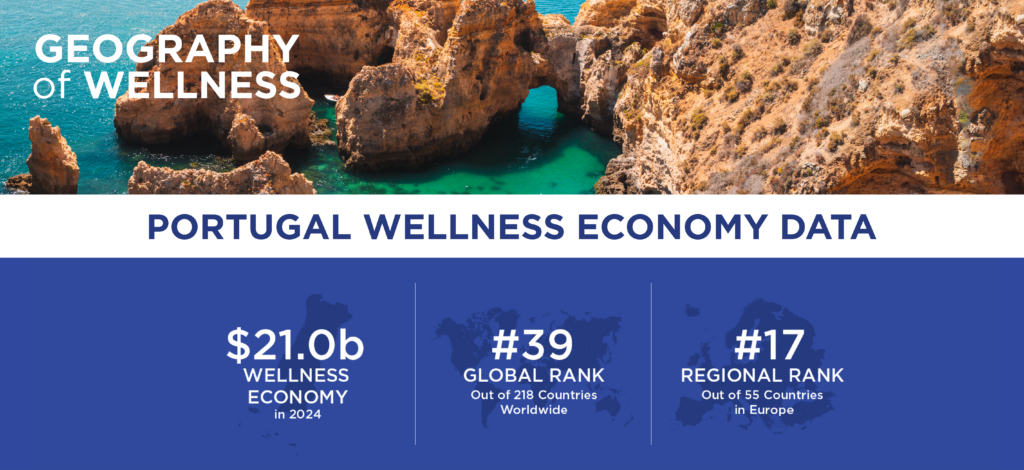
Miami, FL – March 19, 2026 – The Global Wellness Institute (GWI), the leading nonprofit dedicated to research and education in the global wellness industry, has released new data on Portugal’s wellness economy for the first time, highlighting the country’s growing role as a global wellness destination.
The findings, made possible through a partnership with the Associação Portuguesa de Ética Empresarial (APEE), show that Portugal’s wellness economy reached $21.0 billion in 2024, accounting for 6.8% of the country’s GDP—a higher share than the global average of 6.1%.
Portugal’s wellness tourism sector is experiencing particularly strong growth. In 2024, the country welcomed 2.49 million inbound wellness trips, significantly surpassing the pre-pandemic 2019 level of 2.05 million trips. Visitors spent an average of $1,349 per trip, underscoring the increasing economic impact of wellness travel.
“Portugal’s wellness economy is showing remarkable momentum, particularly in wellness tourism, where the country’s natural assets, rich cultural traditions, and growing commitment to wellbeing are resonating strongly with international travelers,” said Susie Ellis, chair and CEO of the Global Wellness Institute. “These new findings highlight Portugal as an increasingly important player in the global wellness market, and they point to significant opportunities for the country to further develop wellness experiences that integrate nature, culture, and holistic health.”
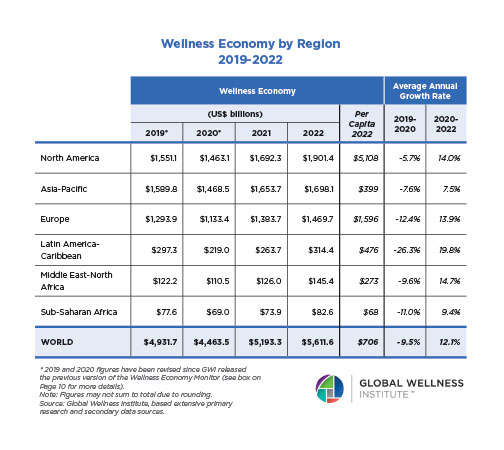
Beyond tourism, Portugal’s wellness spending also outpaces the regional average. Per capita wellness spending reached $1,961, exceeding the European average of $1,876.
The country’s largest wellness sectors include:
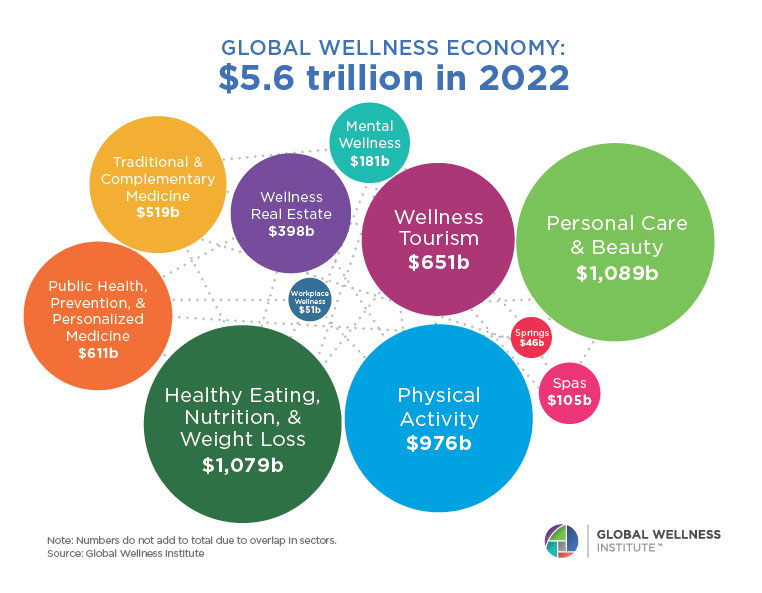
- Wellness Tourism: $5.1 billion
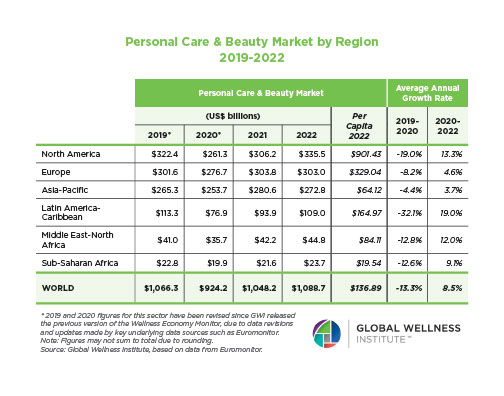
- Personal Care & Beauty: $4.2 billion
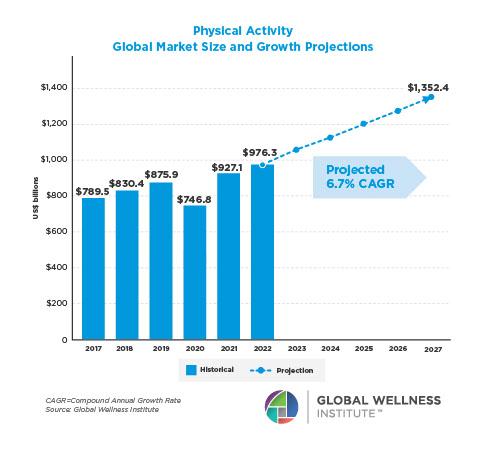
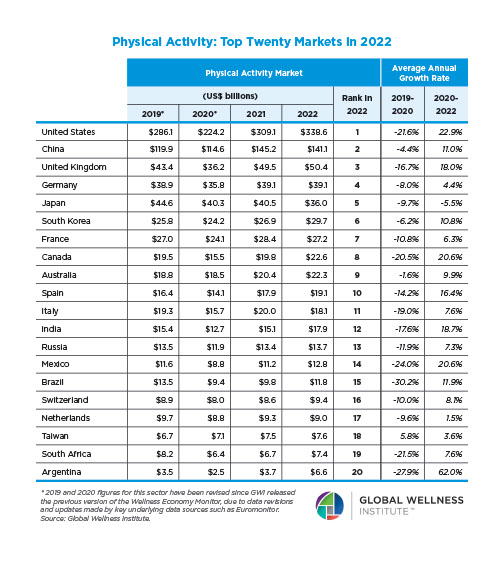
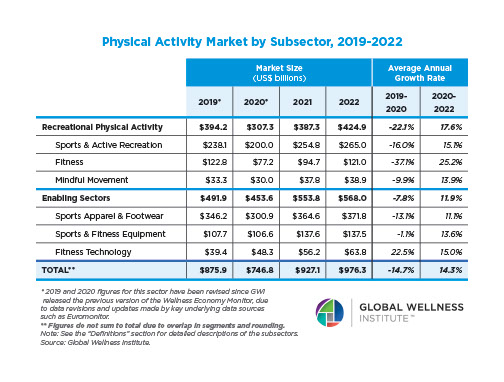
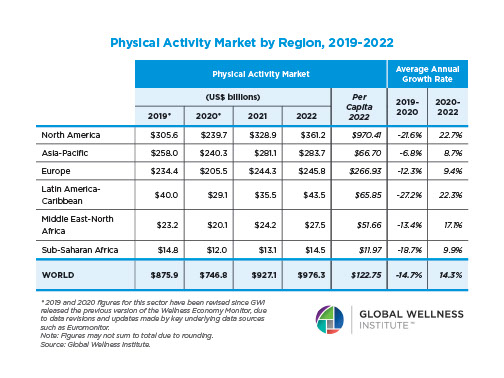
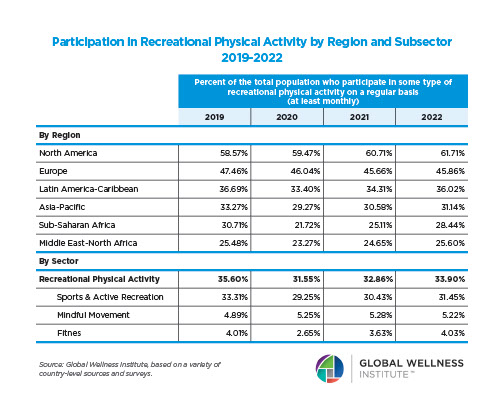
- Physical Activity: $3.7 billion
Together, these sectors reflect the growing role of wellness in Portugal’s economy and its appeal to both residents and international visitors seeking health-focused lifestyles and travel experiences.
“As the APEE, our mission is to promote sustainable development guided by ethical principles and values, and we see the wellness economy as a natural convergence point between wellbeing, sustainability, and responsible business practice,” said Mário Parra da Silva, president of APEE. “Sponsoring Portugal’s Geography of Wellness data enables us to move the national conversation from intuition to measurement: it supports better benchmarking, clearer prioritization across wellness sectors, and more transparent, accountable strategies aligned with ESG and the Sustainable Development Goals. For Portugal, wider access to this data can strengthen the entire ecosystem—from policy design to enterprise innovation—by helping stakeholders identify high-potential segments and communicate Portugal’s distinct wellness assets more effectively in international markets. We believe that better data is a catalyst for better collaboration and better outcomes, economically and socially.”
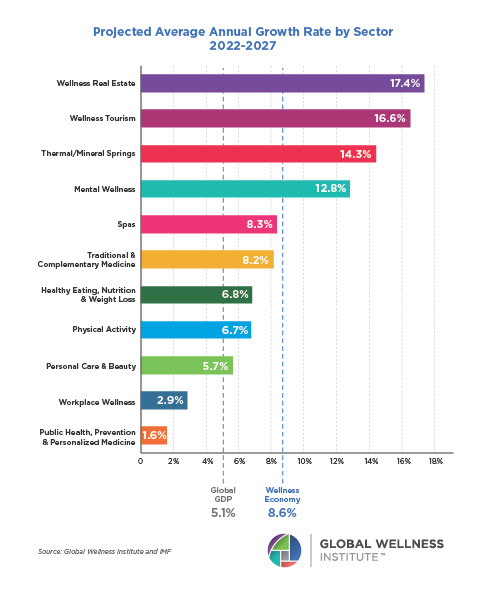
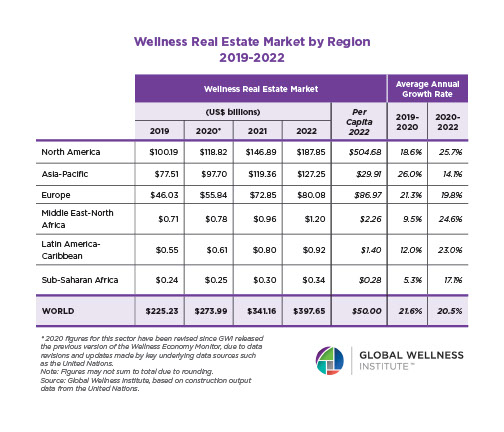
The new dedicated Global Wellness Economy: Portugal report is available for download from the GWI site, and shows the fastest growing wellness sectors in Portugal are Wellness Real Estate (20.6% CAGR), Mental Wellness (13.4%), Public Health, Prevention, & Personalized Medicine (10.2%), and Wellness Tourism (7.4%).
The report will be formally presented at a public event hosted by APEE in Lisbon on March 20, bringing together leaders from business, public institutions, academia, and key sectors including health, tourism, real estate, and sustainability (For more information visit this link)
Living Well in Portugal
Wellness in Portugal has deep historical roots dating back to Roman times, when thermal baths were developed around natural hot springs for therapeutic and social purposes. Portugal is endowed with exceptional natural assets, including a long Atlantic coastline, mineral-rich thermal waters, forests, mountains, and protected natural parks, as well as the archipelagos of the Azores and Madeira. Over centuries, monastic traditions, maritime exploration, and rural lifestyles have reinforced a strong connection between health, nature, and balance. Today, Portugal blends these ancient traditions with modern wellness concepts that integrate spa culture, preventive health, mental well-being, and sustainable living.
Food, culture, and connection are integral to the Portuguese wellness lifestyle. Portuguese cuisine embodies wellness through its Mediterranean roots, emphasizing fresh fish, olive oil, vegetables, legumes, and seasonal ingredients. Cultural experiences such as traditional music, craftsmanship, slow living in rural regions, and strong community bonds contribute to emotional and social wellbeing.
About the Global Wellness Institute
The Global Wellness Institute (GWI), a nonprofit 501(c)(3), is considered the leading global research and educational resource for the global wellness industry and is known for introducing major industry initiatives and regional events that bring together leaders to chart the future. GWI positively impacts global health and wellness by educating public institutions, businesses and individuals on how they can work to prevent disease, reduce stress and enhance overall quality of life. Its mission is to empower wellness worldwide.
About the Associação Portuguesa de Ética Empresarial
APEE (Associação Portuguesa de Ética Empresarial) is a non-profit institutional organization founded in November 2002, dedicated to advancing ethical governance, corporate responsibility, sustainability, and ethics in Portuguese organizations. It is also formally recognized as a Sectoral Standardization Body accredited by the Portuguese Institute for Quality (IPQ), operating within the national standardization framework. In this capacity, APEE coordinates the development of Portuguese standards in areas including ethics and compliance, social responsibility, gender equality, ESG (Environmental, Social and Governance), ethics and integrity in sport, and social response services and integrated continuing care. Its standardization work contributes to the institutional infrastructure that supports responsible business conduct and sustainable economic development. For more information visit https://apee.pt/.