Microplastic Contamination: The Next Big Story in Pollution (and Wellness)

VIEW ALL BRIEF POSTS MONTHLY BAROMETER – WELLNESS EDITION By Thierry Malleret, economist Microplastic contamination is going to be the next big story in pollution… and have a profound impact on wellness. A new study based on global tap water samples has revealed that 83 percent of samples are contaminated with plastic fibers. The U.S. has the highest contamination rate, at 83 percent, followed by…

Backlash from a Mass Tourism Crisis

VIEW ALL BRIEF POSTS By Thierry Malleret, economist Travel and tourism is growing at a faster rate than GDP and, over the next few years, the industry will expand dramatically with the arrival of international travelers from fast-growing economies (China, India, etc.). This, in turn, raises the issue of what will happen with those places already crumbling under the weight of mass tourism. In the…

GWI Launches “Massage Makes Me Happy” Initiative

VIEW ALL BRIEF POSTS Massage has been part of the healing traditions of hundreds of cultures for thousands of years – a natural intervention that has always supported physical and emotional well-being. Massage, quite simply, creates happiness. And the Global Wellness Institute has launched a new initiative focused on promoting the benefits of massage through research, advocacy and global awareness. This awareness campaign will take place…

Must-Reads from the Wellness World (Week of September 27, 2017)

VIEW ALL BRIEF POSTS The Great Nutrient Collapse – Politico, September 13, 2017 The atmosphere is literally changing the food we eat – for the worse. And almost no one is paying attention. Should We Embrace an Enhanced (Wellness) Future? – BBC, September 9, 2017 Do we have the right to enhance our bodies as technology and pharmaceuticals will soon allow or is that immoral?…
MONTHLY BAROMETER – WELLNESS EDITION: Silicon Valley: An Obsession with Wellness AND Extreme Workaholism

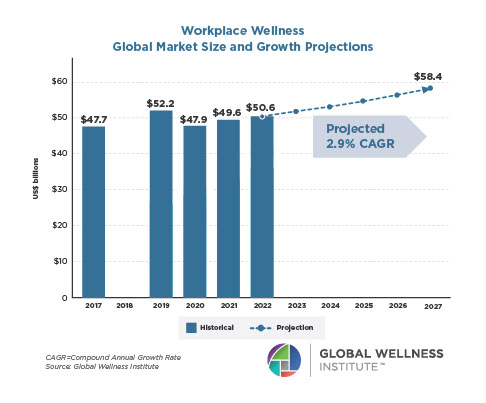
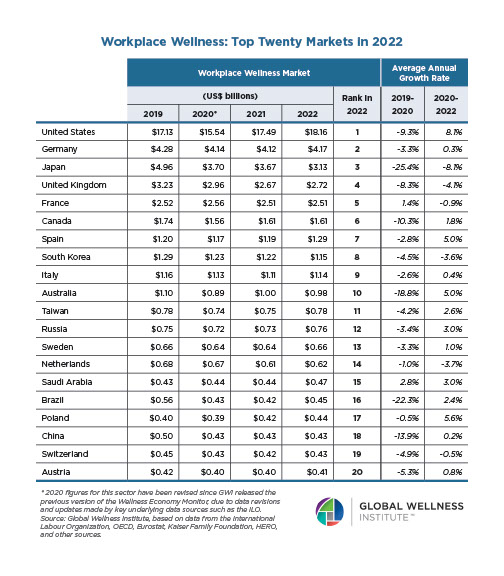
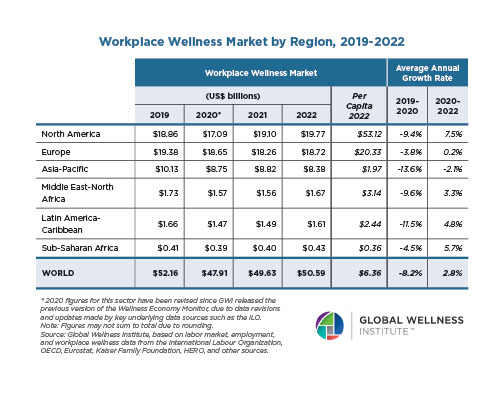
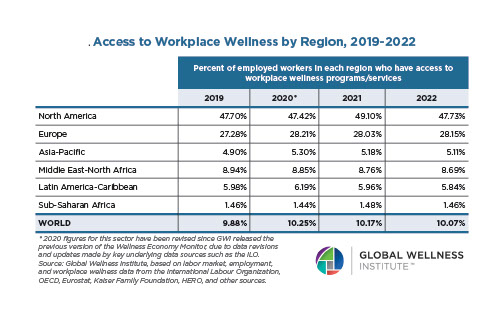
In Silicon Valley, the temple of entrepreneurship, an obsession with wellness (healthy eating, mindfulness, exercise, etc.) coexists with the glorification of stress and sleep deprivation. Its workplace culture extols extreme workaholism: trumpeting that working less than 18 hours a day “is for losers” (while a famous t-shirt says “9 to 5 is for the weak”). How can this proposition be advanced by an intelligent, highly data-literate community when it flies in the face of scientific evidence?