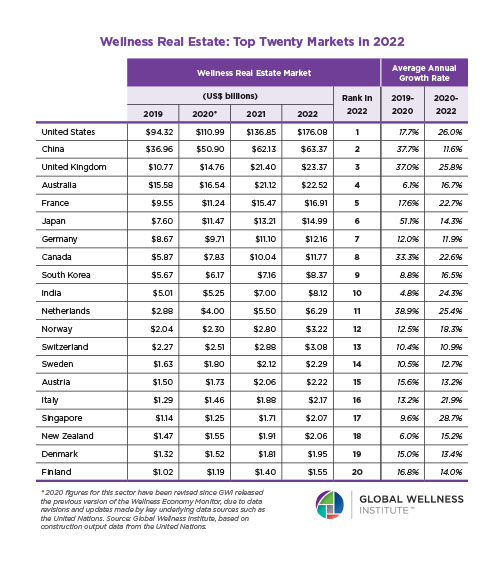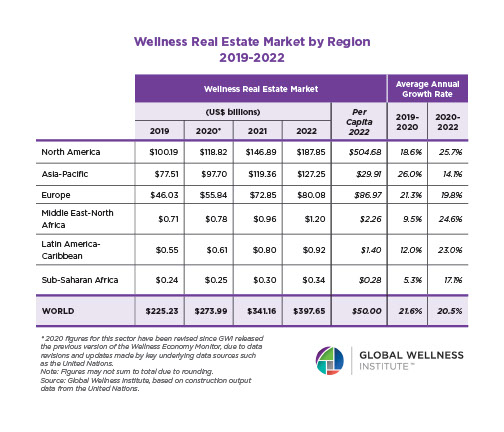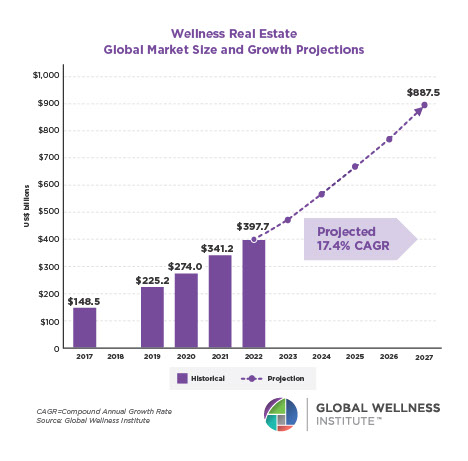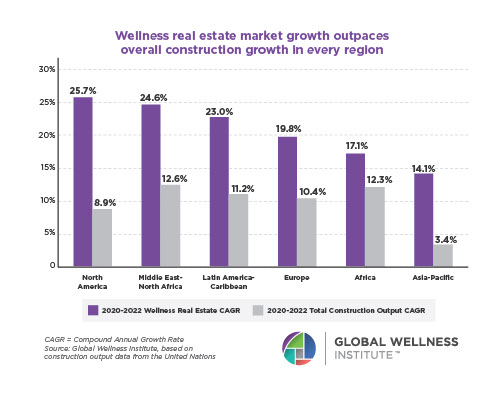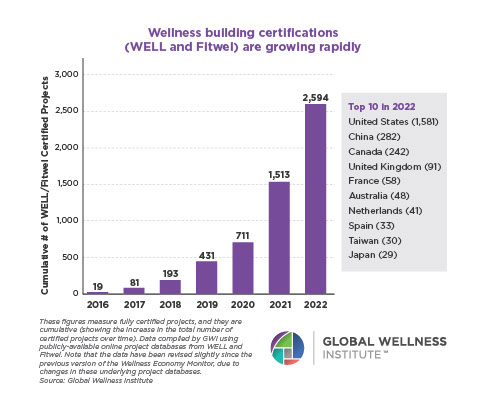
The Global Wellness Institute’s (GWI) Wellness Moonshot, A World Free of Preventable Disease, is a global call to action. And while typically campaigns around prevention focus on issues like obesity and smoking, the GWI’s new research report, “Build Well to Live Well: Wellness Real Estate & Communities”, argues that we cannot address the rising crisis of chronic disease without committing to a dramatic transformation in where and how we live – because our homes, communities, and surrounding environment together determine up to 80-90% of our health outcomes.

Must-Reads from the Wellness World (Week of February 13, 2018)
Yale’s Most Popular Class Ever: Happiness – The New York Times, January 26, 2018
Yale’s new course on “Psychology and the Good Life” is proving extremely successful, with one in four students enrolling in it (while half of undergraduates seek mental health care from the university during their time there). According to Laurie Santos, who teaches the course, the things Yale undergraduates often connect with life satisfaction – high grades, a prestigious internship, a good-paying job – do not increase real happiness. By contrast, if students end up showing more gratitude, procrastinating less, increasing social connections, there’ll be a radical change in culture.
Global Wellness Institute to Release Three Research Reports Jan. 24
At a press event on Wed. Jan 24 in Manhattan, the GWI will release three new research reports on future trends in wellness markets.
MONTHLY BAROMETER – WELLNESS EDITION: 2018 Trend: Backlash Against Big Tech Companies & Addictive Social Media
2018 will see a much more fierce backlash against Big Technology and the toxic properties of social media. More tech workers will speak out on how they engineer addiction – concerns about the negative impact of tech on mental health will come even further to the fore – and more people will take action to limit their screen hours.
Tourism to Grow 2X Faster than GDP in 2018 – So Managing Over-Tourism Will Be Huge Issue
Tourism is predicted to grow fast this year, making the backlash against – and the need to find solutions for – over-tourism a major concern. Especially in the wellness travel space…
Video: Living to 160?
At the 2017 Global Wellness Summit, Dr. Michael Roizen, the renowned integrative medicine leader from the Cleveland Clinic, explored “Living to 160” – how it’s possible and what it takes.