2026 Global Wellness Summit Will Explore the Future of Asia’s Foundational and Fast-Evolving $2 Trillion Wellness Market
The conference in Thailand this year will reveal why, if you want to understand the future of wellness, you need to understand the Asian market—from the region’s innovations in driving longer healthspans for its fast-aging populations, to taking a far more integrative approach to longevity, to putting social connection at the heart of wellness
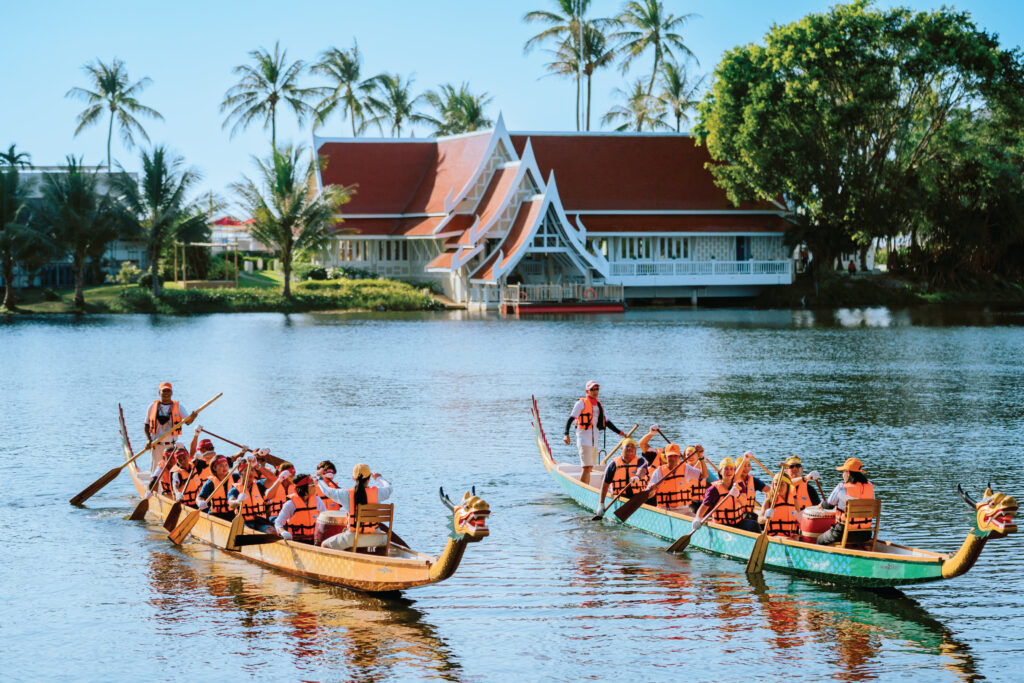
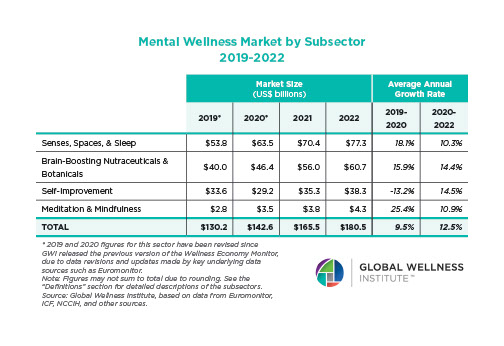
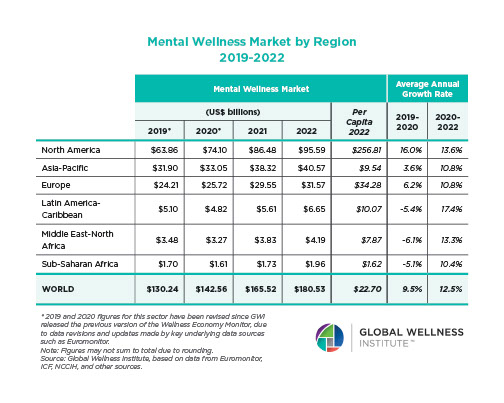
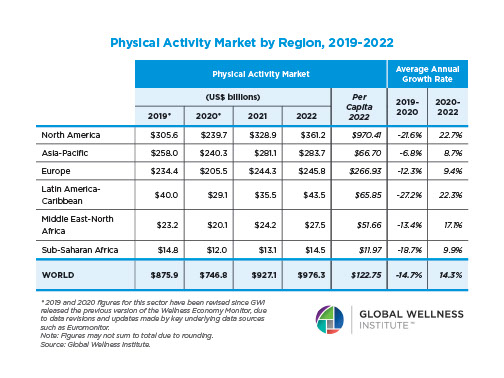
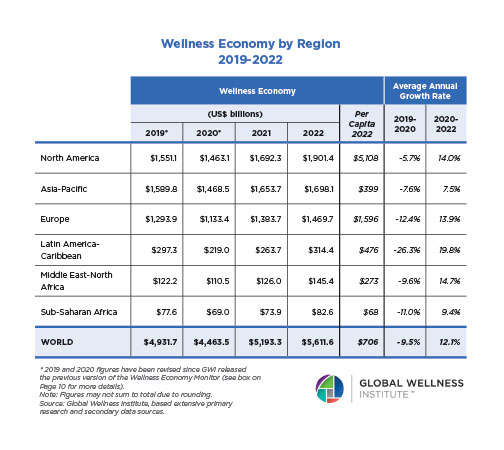
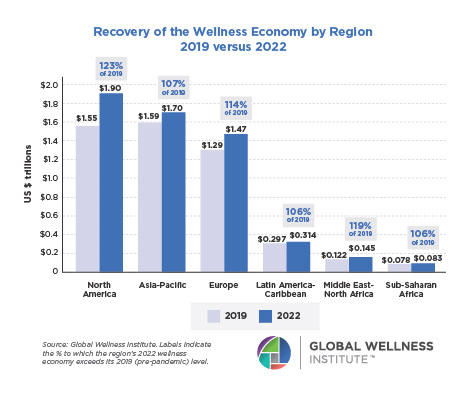
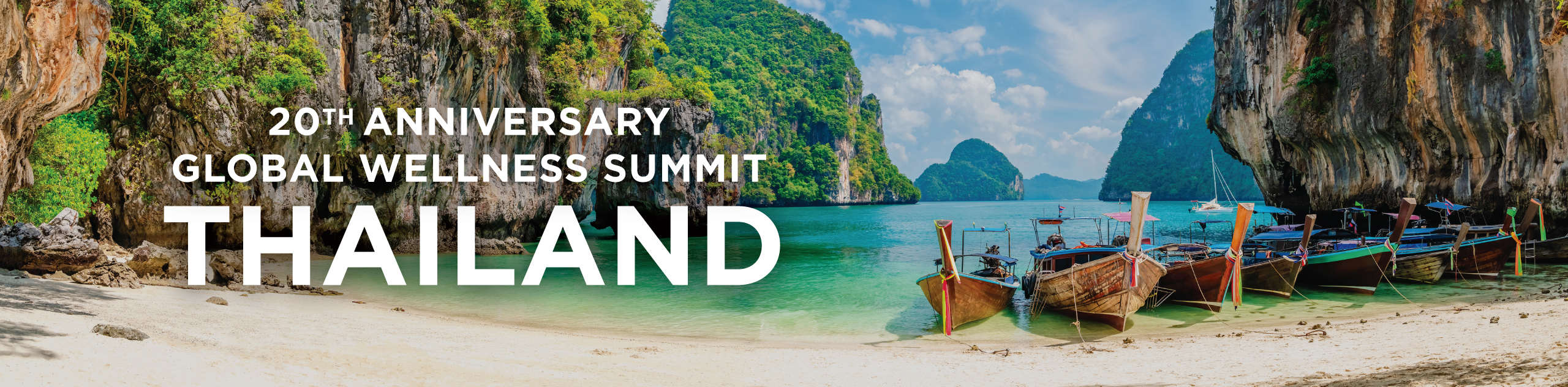
The Global Wellness Summit ™ (GWS), the foremost gathering of leaders in the global wellness economy, holds its milestone 20th-anniversary event at the Angsana Laguna Phuket in Thailand from November 10-13, with the theme, “The Science, Art and Soul of Wellness.” The agenda will tackle the question, “Why Asia, why now?”, with speakers discussing not only the biggest opportunities across Asia’s fast-growing wellness economy, but how Asia’s unique wellness approaches and innovations are critical to understanding the broader future of wellness. If Asia-Pacific’s wellness market was hit hardest and longest by the pandemic, it’s now roaring back: It has reached $2 trillion for the first time, and its recent 9.3% annual growth (2024) makes it tied with Europe as the global wellness market growth “star.”
CEOs of wellness companies, doctors and academics, tech leaders, and policymakers will help delegates grasp why Asia is key to understanding the future of wellness. If Asia was first to experience plummeting birth rates and fast-aging populations (now rewriting the world), the region is becoming a living laboratory for solving for healthier longevity (healthspan). If the new “Western longevity” has revolved around the self-involved quests of tech bros determined to live to 150, for Asia, keeping aging populations healthier longer is about economic survival. The conference will explore the many innovations underway, whether in government policy or at wellness destinations.



Asia is also trailblazing the future of longevity with a distinctly more integrative approach. Its millennia-old, prevention-focused traditional medical systems (i.e., TCM and Ayurveda) forged the modern wellness movement by bringing meditation, yoga, plant-based medicines, spirituality and nature-as-healing to the world. The conference will explore how Asia is now out in front with longevity clinics and resorts that marry cutting-edge longevity science and diagnostics with ancient healing modalities—to create a true medical-wellness paradigm.
The focus will be on Asia’s distinct wellness travel, spa, beauty, traditional medicine, wellness real estate, architecture and design, and policy sectors. Experts will share lessons learned from South Korea’s astounding K-Beauty boom, where a million people a year travel there for aesthetic services and with K-beauty products now an $11-billion-plus export market. Hospitality leaders will explore how Asian brands are creating a new future for wellness travel, one with a deep focus on social connection, sustainability, and the arts and creativity. With neuroaesthetics and art’s impact on wellbeing a hot topic this year, Asia’s powerful design landscape will be brought to life, from its unique architecture-for-wellness philosophies to Thailand’s renowned and evolving textile culture.

“Asia is the primary growth engine for the future of travel, luxury and wellness because of the unmatched expansion of its middle class and wealth creation, infrastructure investments, economic resilience and scale, and rapid technology advancement,” said Cathy Feliciano-Chon, a co-chair of this year’s conference and managing partner at FINN Partners Greater China. “It also faces many challenges, with declining fertility rates and a ‘silver tsunami’’—issues that all intersect with the future of wellness, prevention and longevity. Asia is at the nexus of both these opportunities and challenges.”
Asia’s Standout Wellness Markets & Growth Leaders:
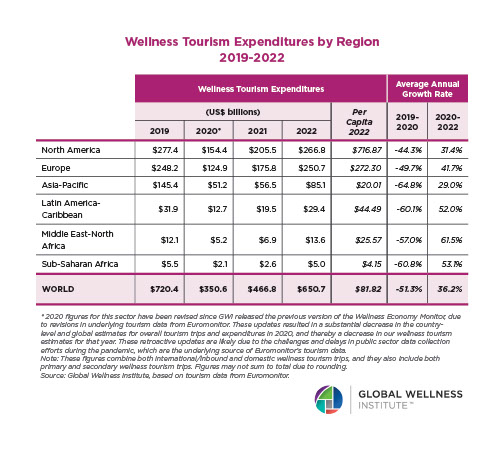
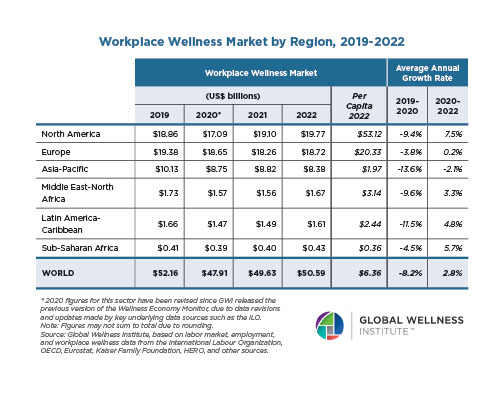
According to Global Wellness Institute (GWI), Asia was one of the slowest-growing regional wellness markets from 2021-2023, but it’s now surging back, expanding a world-leading 9.3% in 2024, to reach $2 trillion—74% larger than its pre-pandemic size.
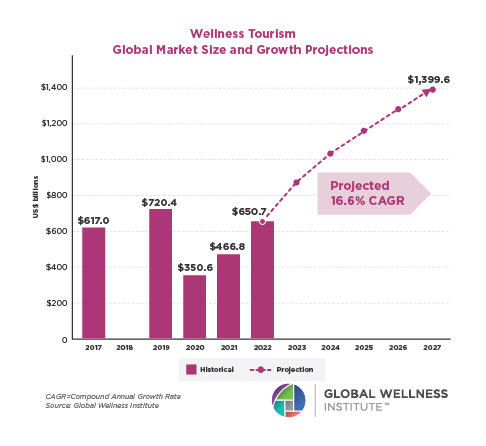
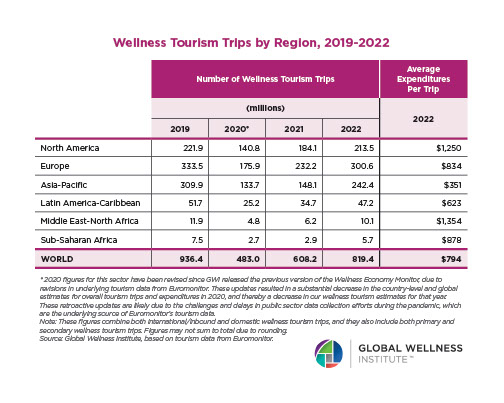
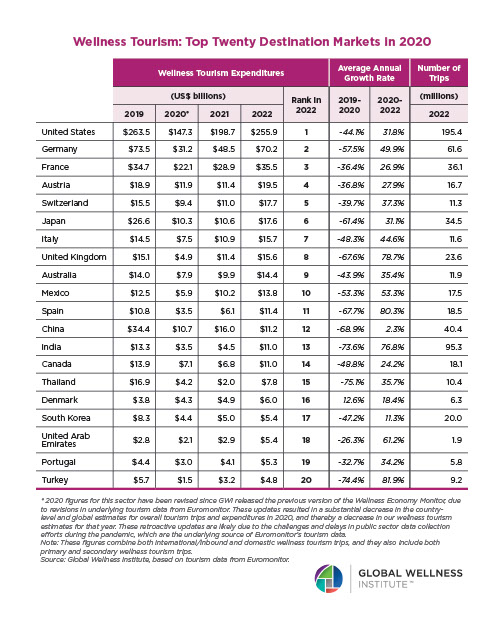
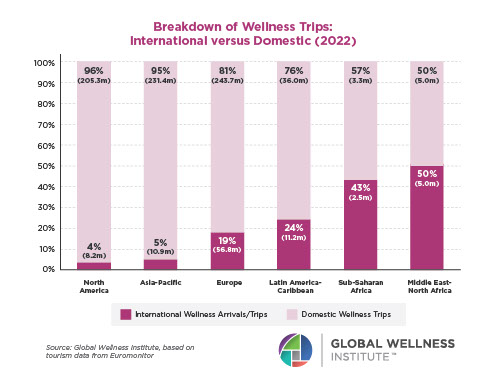
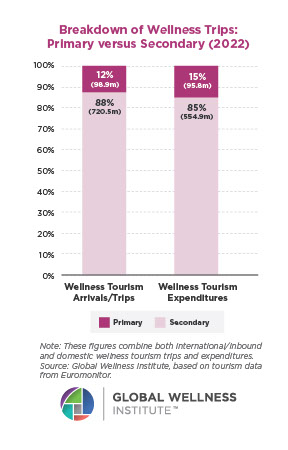
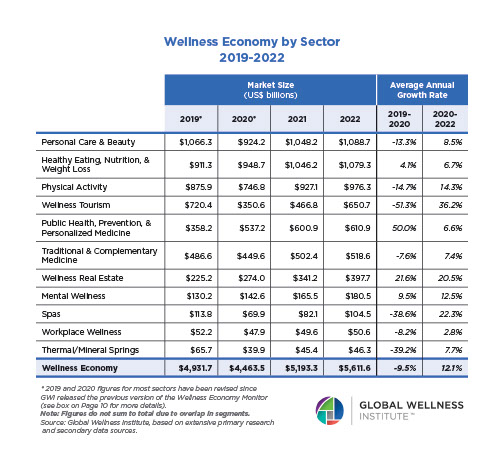
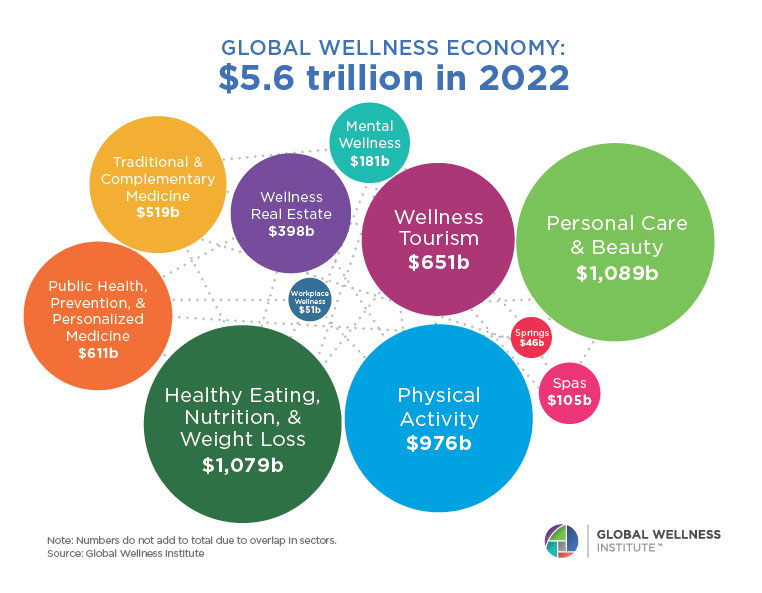
Wellness Tourism: Asia’s $215 billion wellness tourism market has been by far the biggest recent global gainer: growing 31% in 2024, the year it surpassed Europe for the largest number of wellness trips. Four of the top five recent annual growth leaders are in Asia: India (57%), Thailand (36%), South Korea (36%), and China (35%). Asian hospitality brands—including Thailand’s Kamalaya and Chiva Som, India’s Ananda in the Himalayas, Bali’s COMO Shambhala Estate, and The Farm at San Benito in the Philippines—have shaped modern wellness for decades (well before people even used the term).
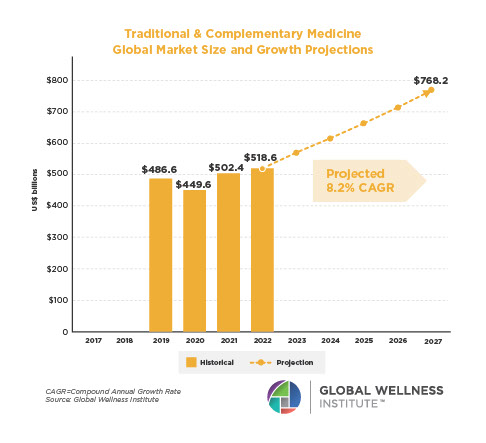
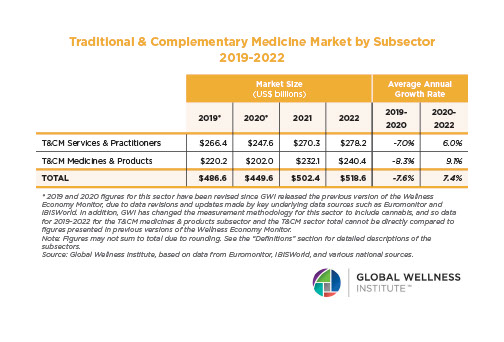
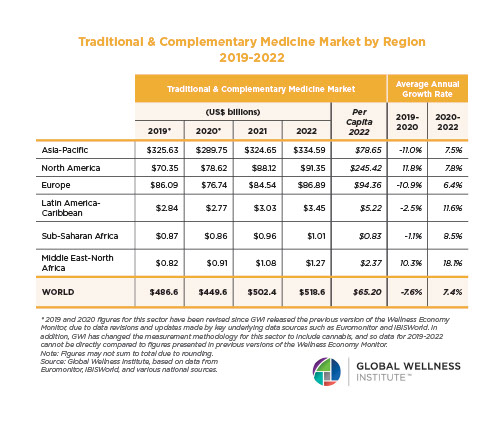
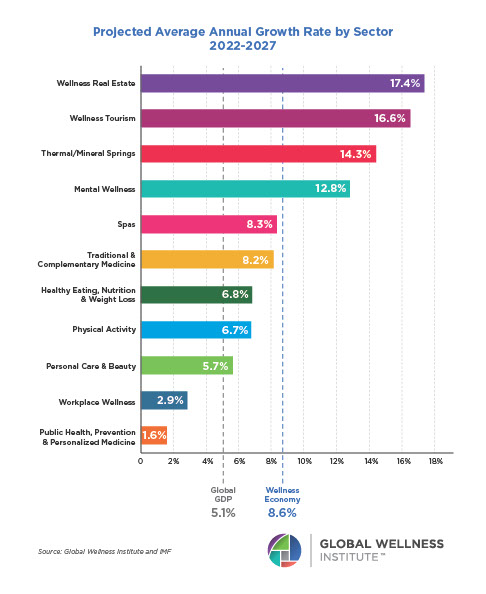
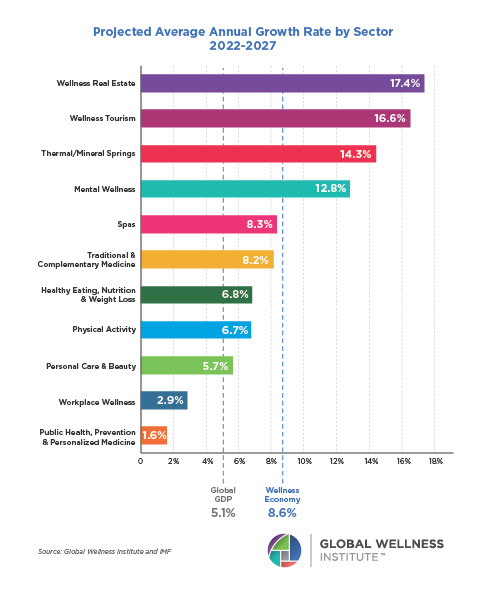
Traditional & Complementary Medicine: GWI predicts traditional and complementary medicine will be the second fastest-growing wellness market through 2029 (11% annually), and Asia is the goliath market at $379 billion (three times larger than the next regional market and representing an extraordinary 63% of global spending). Asian traditional medicine systems are undergoing a reimagining and expansion, from TCM being embraced by younger gens in China to Chinese universities using AI to optimize TCM for a global audience. Rising global interest was made clear when Western TikTok users went crazy for “becoming Chinese” TCM wellness practices this year, racking up tens of millions of views.
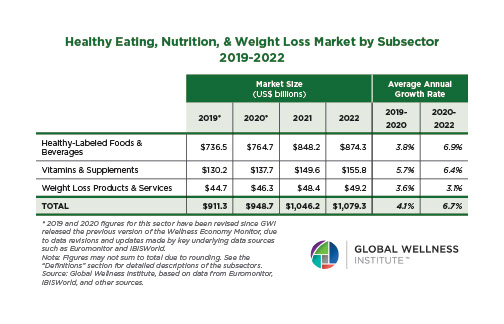
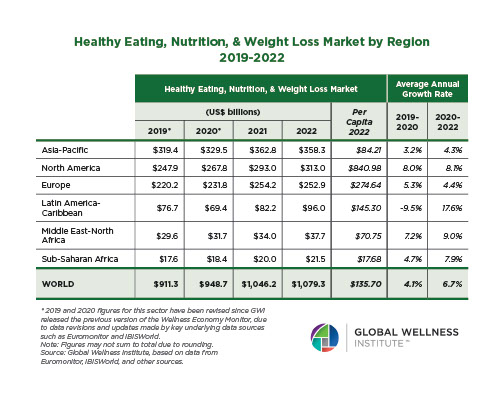
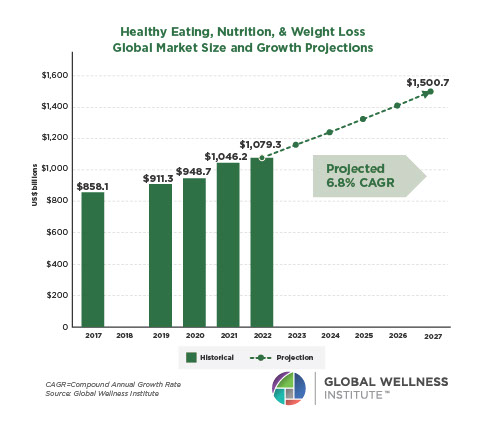
Healthy Eating, Nutrition, & Weight Loss: Asia is the world’s largest market at $347 billion, and it’s also the biggest recent global growth gainer, expanding 7.7% in 2024.
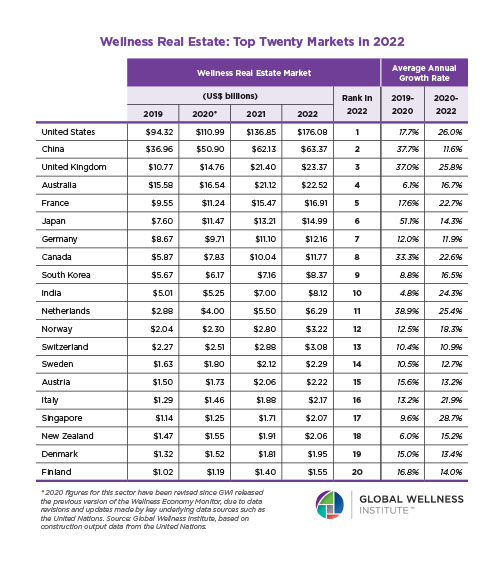
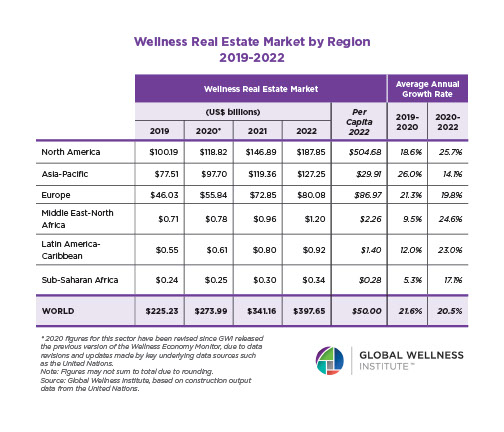
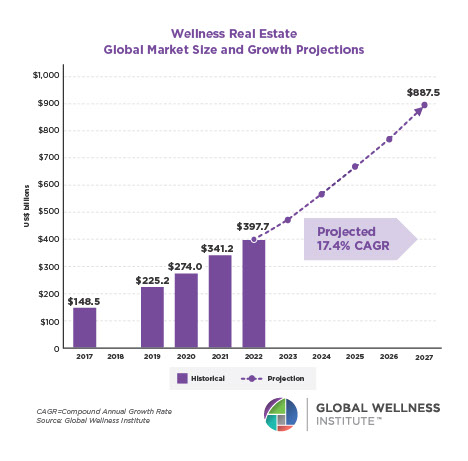
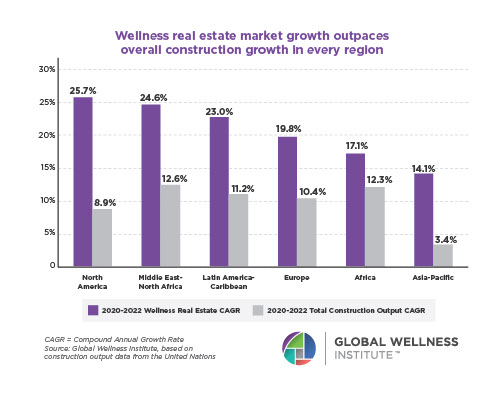
Wellness Real Estate: Asia is now the world’s largest market ($350 billion), clocking powerful 26% annual growth from 2019 to 2025. Seven of the top 20 wellness real estate markets are in Asia, including #2 globally, China ($218B), #4 Australia ($38B), #6 Japan ($34B), and #11 India ($20.5B).
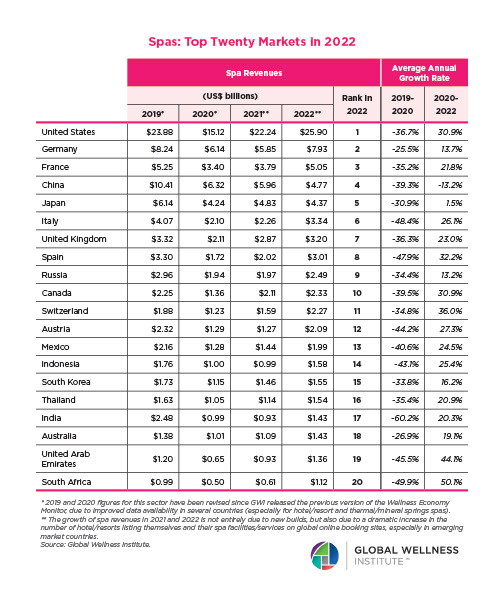
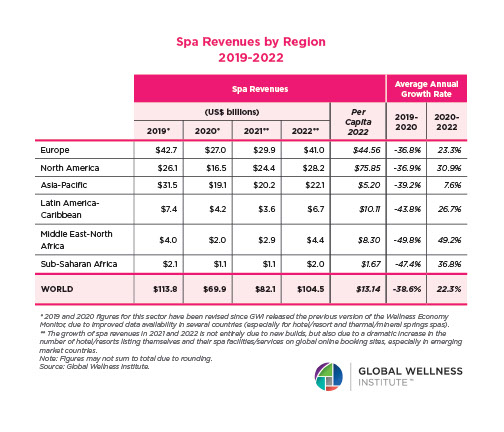
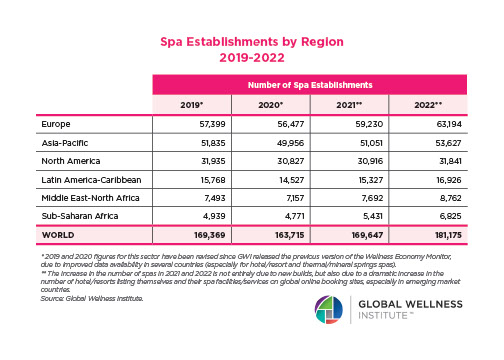
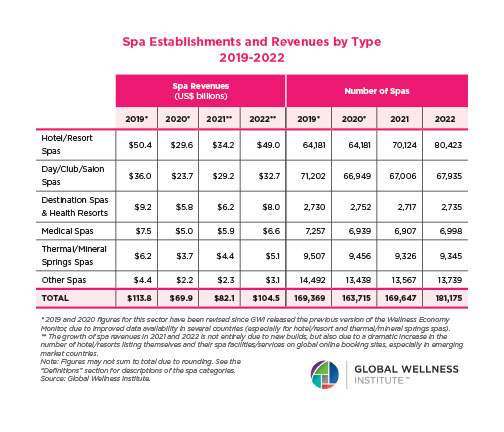
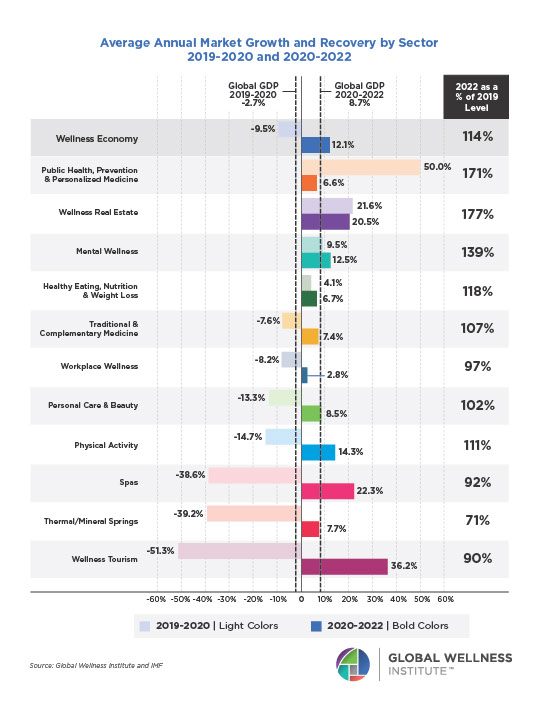
Spas: Asia is the second-largest spa market in the world (behind Europe) at $42.5 billion. Coming out of the region’s long pandemic, revenues grew 54.7% in 2023 and 17.3% in 2024. Among the world’s largest spa markets, Asian nations have been among the very fastest growing annually over the last 5 years: Vietnam is the growth star at 15.6%, followed by India (8.1%), China (7.6%) and Indonesia (7.5%).
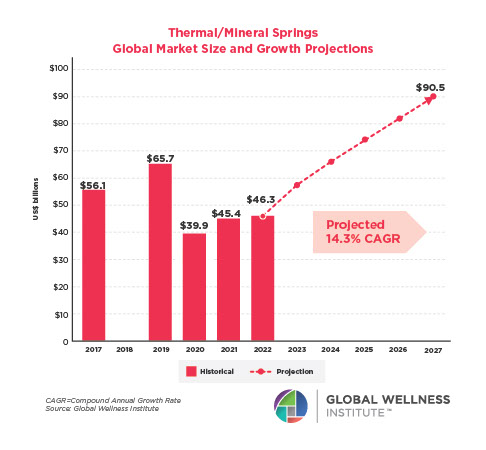
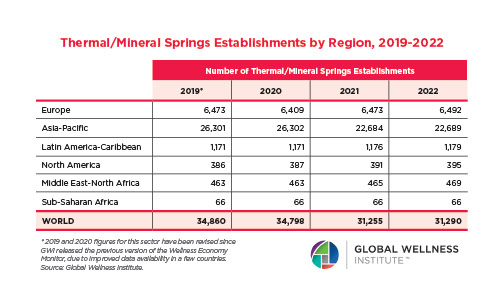
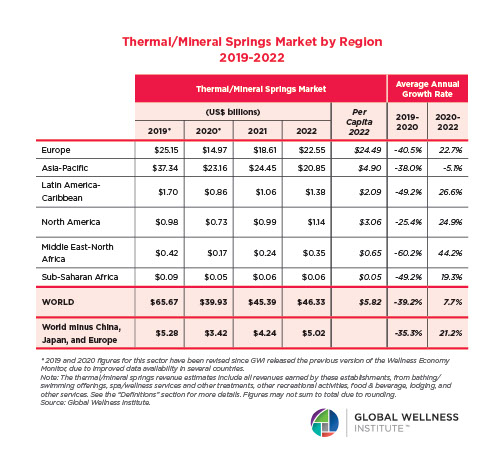
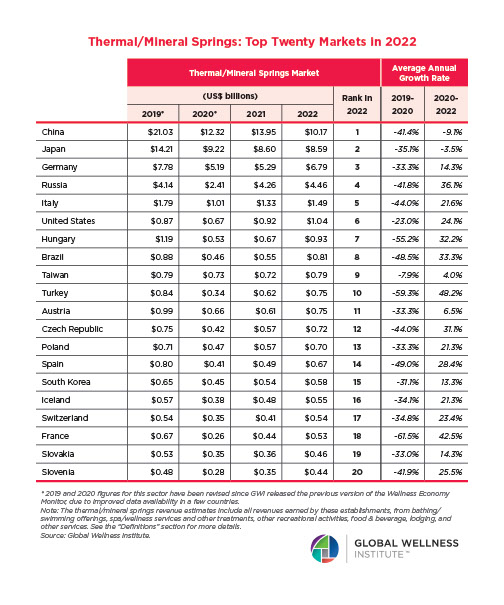
Thermal/Mineral Springs: Asia is the world’s largest hot springs market ($38 billion) with an incredible 22,611 establishments—more than three times that of Europe (6,521). China ($21.4B) and Japan’s markets (13.6B) together represent a staggering $55 billion of the global $72 billion hot springs market. Social bathing—from Korea’s jjimjilbangs to Japanese onsens—is a pillar of Asian wellness, and now a global phenom, and Asian brands, like Japan’s Hoshino Resorts, are planning global expansion for their ancient-made-modern onsen resorts.


Asia—The Lab Solving for Our Aging World:
Across Asia—whether in Japan, China, Korea, Singapore, and now even in India—fertility rates are plummeting and populations are aging at a pace never seen before. By 2050, more than one in four Asians will be 60 or older. Becoming a “longevity society” entails huge economic and societal challenges, from spiking healthcare costs to a shrinking labor force. So, for Asian countries, healthy longevity is not just some individual pursuit but an absolute economic imperative—and many Asian countries are working hard on entirely new models of aging while shifting their health systems to prevention.
This year’s Summit will explore how Asia is the testbed for the “aging wave” coming for the rest of us, and what’s underway in their rethinking of a healthy, productive 100-year life. China’s “Healthy China 2030” is a multipronged policy plan that puts prevention first, and the government just launched a first-of-its-kind program where doctors will be trained in longevity medicine (spanning diagnostics, AI, exercise, nutrition and TCM). Singapore’s policies to drive healthy longevity are so creative and comprehensive that 2026 GWS keynote speaker, and identifier of the world’s Blue Zones, Dan Buettner, named Singapore the sixth Blue Zone, unique globally for “engineering” longevity through policy. Singapore has unleashed a range of policies that keep people moving (including a national challenge where if you hit 10,000 steps a day, you get points at restaurants/shops); that incentivize healthy foods (they’re subsidized); and that keep people intergenerationally supported as they age (tax breaks if you live with/near your older parents).
Asia’s Integrative Approach to Longevity:
In the West, new clinical longevity solutions have stolen headlines from traditional wellness approaches such as movement, stress reduction, healthy food, and sleep, etc. (even though these wellness pillars remain the most evidence-based path to a long, healthy life). Asian resorts and clinics are pioneering an integrative future for longevity, where advanced science meets holistic wellness. At the brand-new clinical wellness resort tulåh in Kerala, India, the ancient principles of Ayurveda, yoga, Vedanta, Tibetan medicine and TCM (along with the world’s largest sound healing dome) meet advanced medical diagnostics and regenerative medicine. At RAKxa Integrative Wellness in Bangkok, state-of-the-art preventative medicine is united with Thai healing traditions. At Tri Vananda, a multigenerational wellness living community in Thailand, functional and integrative medicine come together with cognitive health and mindfulness—and famed Swiss longevity science leader, Clinique La Prairie, will open a resort there this year.
Thailand’s Transformation into a Wellness and Longevity Tourism Leader:
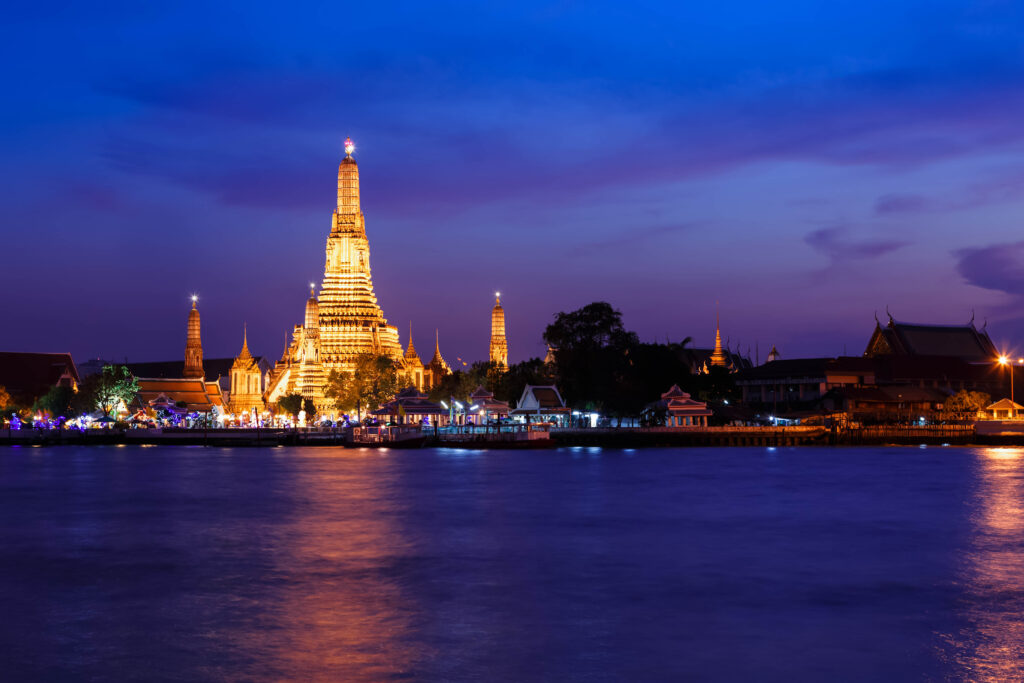
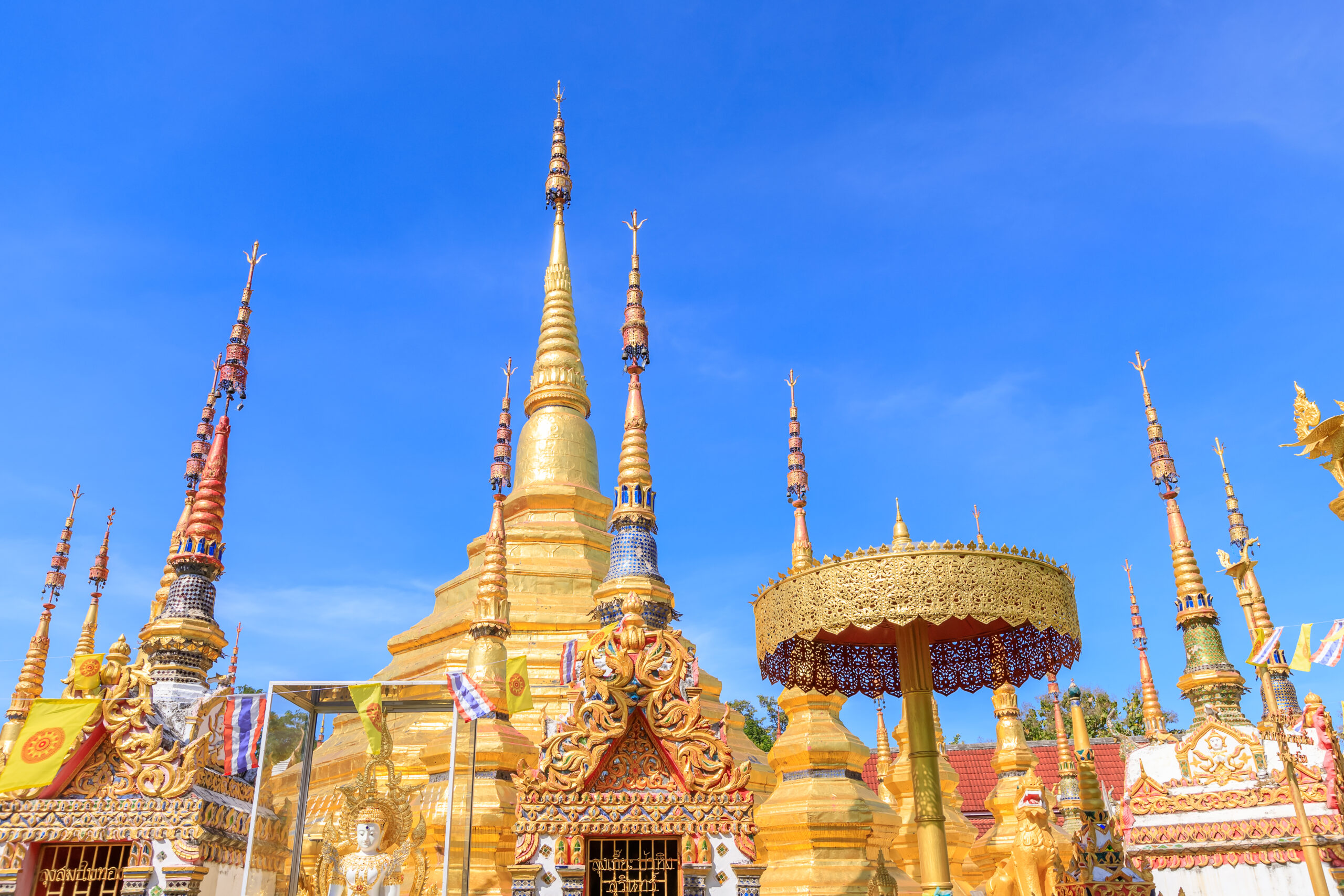
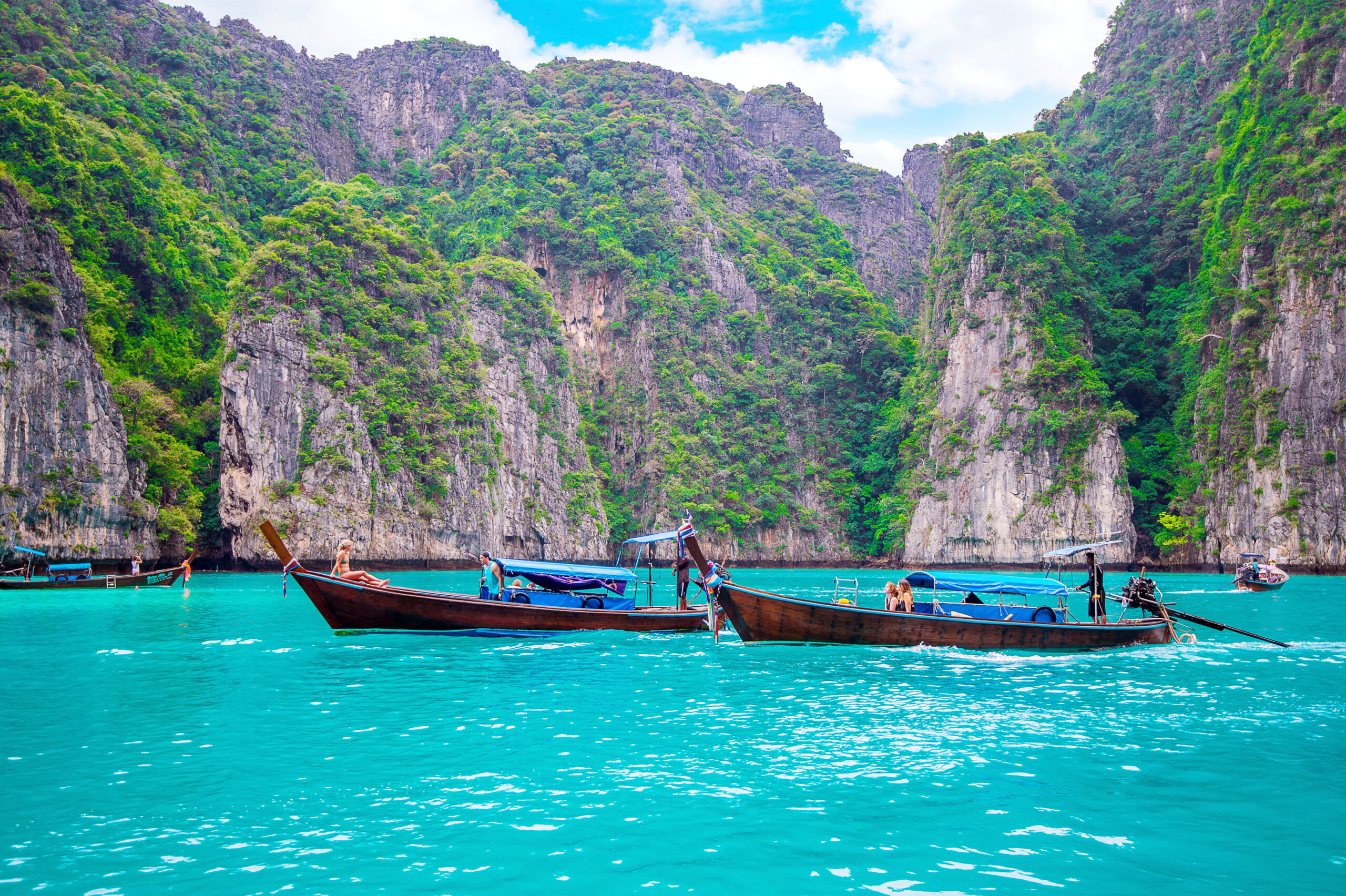
Thailand’s millennia-old wellness traditions run deep—from traditional Thai medicine and massage to its food-as-medicine culture. Now, new clinics and healthcare hubs are rewriting medical tourism as longevity tourism, offering advanced diagnostics and personalized intervention plans. The country is pushing on all fronts to become the world’s newest wellness and preventative health center. They’ve launched a pivotal new global wellness tourism campaign, “Healing Journey Thailand,” and unveiled a major public-private initiative (with more than 20 organizations, from healthcare to hospitality) to develop and position the country as a connected ecosystem for wellness, health and longevity tourism (“Wellness Hub Thailand, The Land of Life: The Journey Within”). BDMS Wellness Clinic, a major Thai healthcare provider known for its advanced preventative health solutions, is at the heart of the country’s transformation, and BDMS has just announced a mega-project in Bangkok (BDMS Silver Wellness & Residences) that will combine world-class medical facilities and longevity clinics with residences.
“Thailand is the perfect host for a conference that will explore wellness’s deepest historic roots and its more medical, high-tech future, and I’m so excited that we’re celebrating our 20th anniversary there,” said Susie Ellis, GWS chair and CEO. “In Thailand—and all across Asia—there’s that unique mix of foundational wisdom and innovation in wellness, preventative health and longevity. We want to immerse delegates in the future of Asia, because it’s the future of wellness.”
About the Global Wellness Summit:
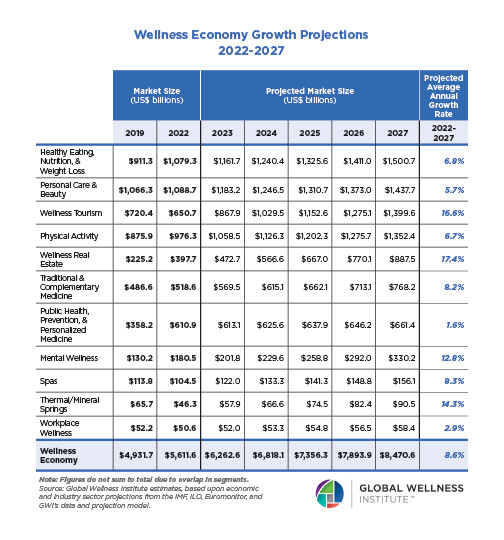
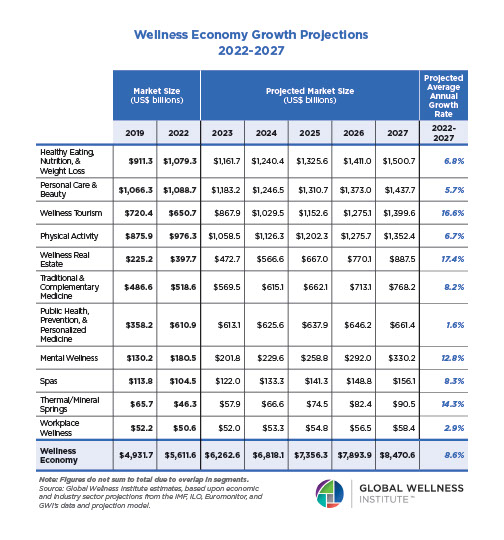
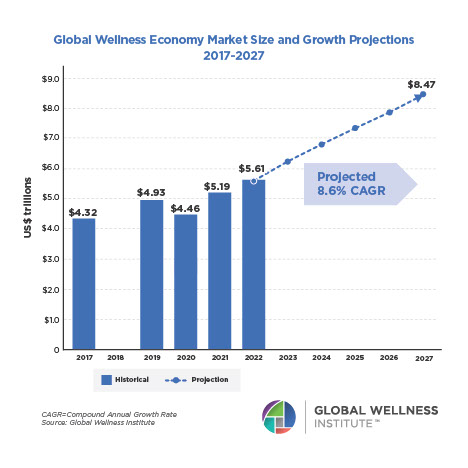
The Global Wellness Summit brings together leaders and visionaries to positively shape the future of the $6.8 trillion global wellness economy. In addition to an annual conference held at a different location around the globe, GWS also hosts annual in-person events such as the Wellness Real Estate & Communities Symposium, along with virtual gatherings, including Wellness Master Classes and Wellness Sector Spotlights. The organization’s Future of Wellness report forecasts the top wellness trends for the year ahead and is oft-quoted in the media. The 20th annual Global Wellness Summit will be held in Phuket, Thailand, November 10-13, 2026.
Registration for the Summit is open: apply here
Accredited media can apply to attend: apply here